Our answer
Jackery is the lightest selected record, Anker publishes a 10ms transfer claim and fast recharge, and BLUETTI publishes a 10ms-or-less UPS claim with strong solar input. None is treated as a medical UPS certification.
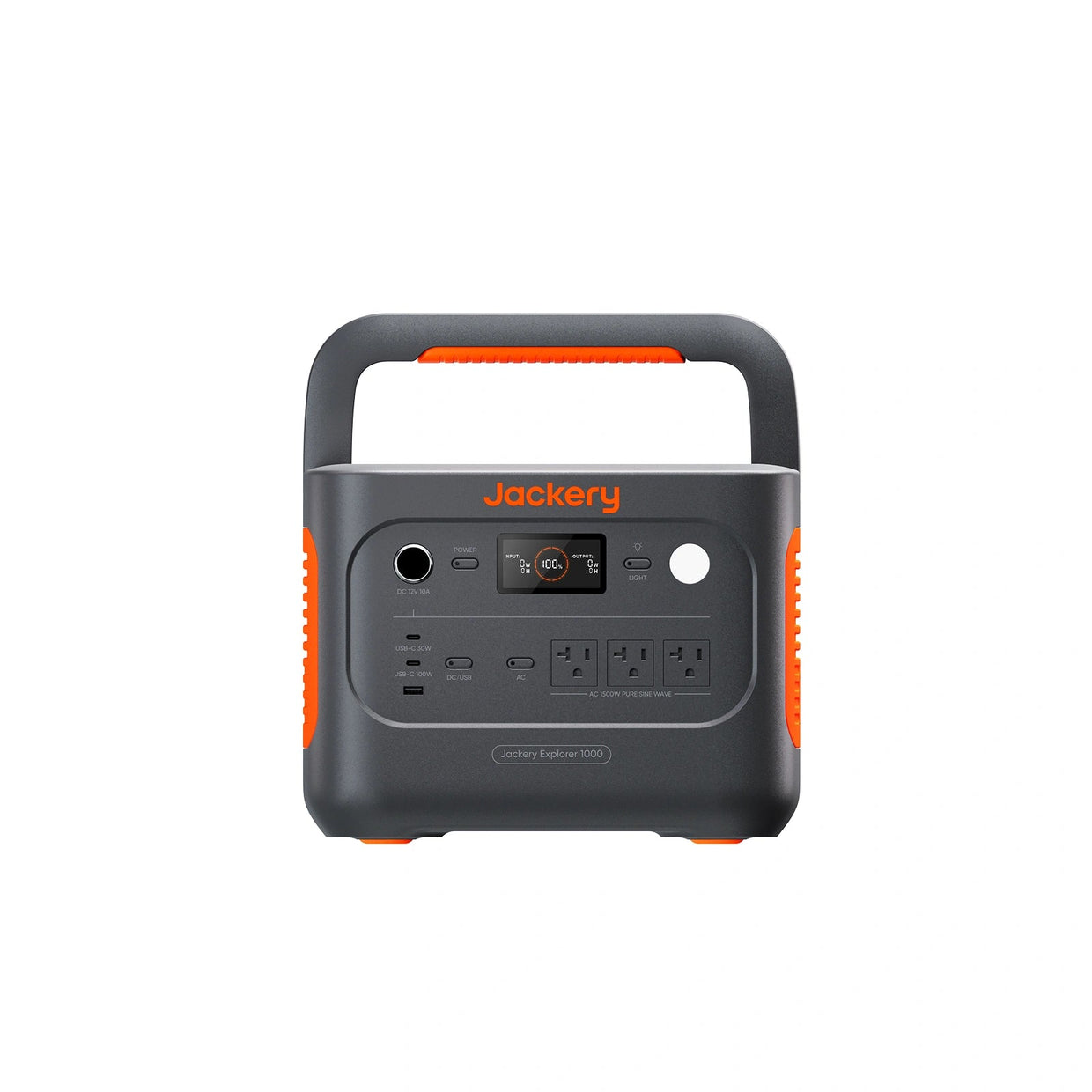
Best overall for portability
Our first recommendation
Jackery Explorer 1000 v2
The lightest selected station offers ample rated capacity for multi-night planning without making a travel or evacuation kit unnecessarily hard to move.
- Capacity
- 1,070 Wh
- AC output
- 1,500 W
- Direct price
- $499, checked Sep 21, 2026
Quick picks
The strongest choice for each buying priority
Detailed recommendations
Why each product earned its position
Each recommendation includes the buying case, the reason to pass, current direct-price context, the specifications that affect this use, and a link to the complete source record.
Best overall for portability
Jackery Explorer 1000 v2
Why it ranks here
The lightest selected station offers ample rated capacity for multi-night planning without making a travel or evacuation kit unnecessarily hard to move.
- Direct price
- $499, checked Sep 21, 2026
- Rated capacity
- 1,070 Wh
- Continuous AC
- 1,500 W
- Published peak
- 3,000 W
- Solar input
- 400 W
- Weight
- 23.8 lb
Value context: Jackery lists the bare unit at $559 and was showing $499 on the date checked. This is the Basic option, without solar panels.
- Best for
- Users who need multi-night reserve and expect to carry the station.
- Skip it if
- High solar input or a published 10ms transfer claim is the leading requirement.
What works
- Lightest at 23.8 lb
- 1,070Wh rated capacity
- Low captured direct price
Tradeoffs
- Published transfer value is 20ms
- 400W maximum solar input
Best for fast recovery
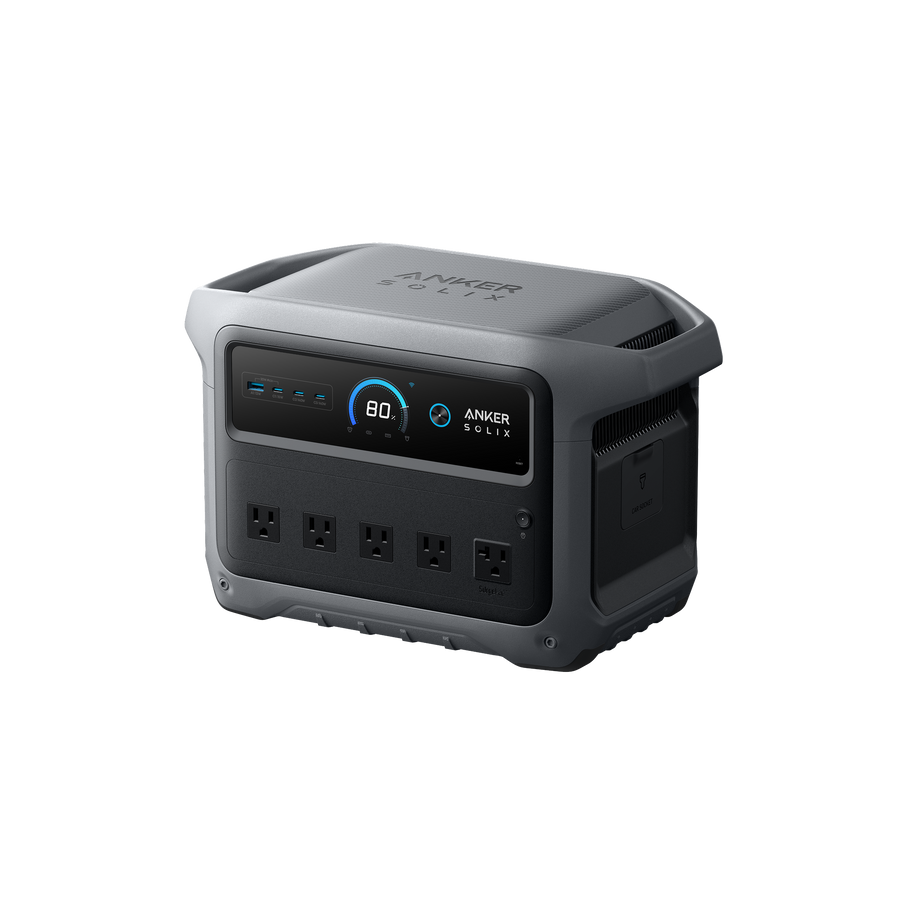
Anker SOLIX C1000 Gen 2
Why it ranks here
A published 10ms transfer claim and fast AC recharge support a shared emergency kit after the exact CPAP setup has been tested.
- Direct price
- $529.99, checked Sep 21, 2026
- Rated capacity
- 1,024 Wh
- Continuous AC
- 2,000 W
- Published peak
- 3,000 W
- Solar input
- 600 W
- Weight
- 24.9 lb
Value context: Anker was showing $529.99 with no promotional reduction on the date checked, for the unit without a solar panel.
- Best for
- A home backup kit that powers CPAP plus additional devices and can recharge from the grid quickly.
- Skip it if
- You want expandable capacity or the highest solar input.
What works
- Published 10ms transfer claim
- 49-minute fast-charge claim
- 2,000W continuous output for shared loads
Tradeoffs
- Not treated as a medical UPS certification
- Non-expandable capacity
Best solar-supported option
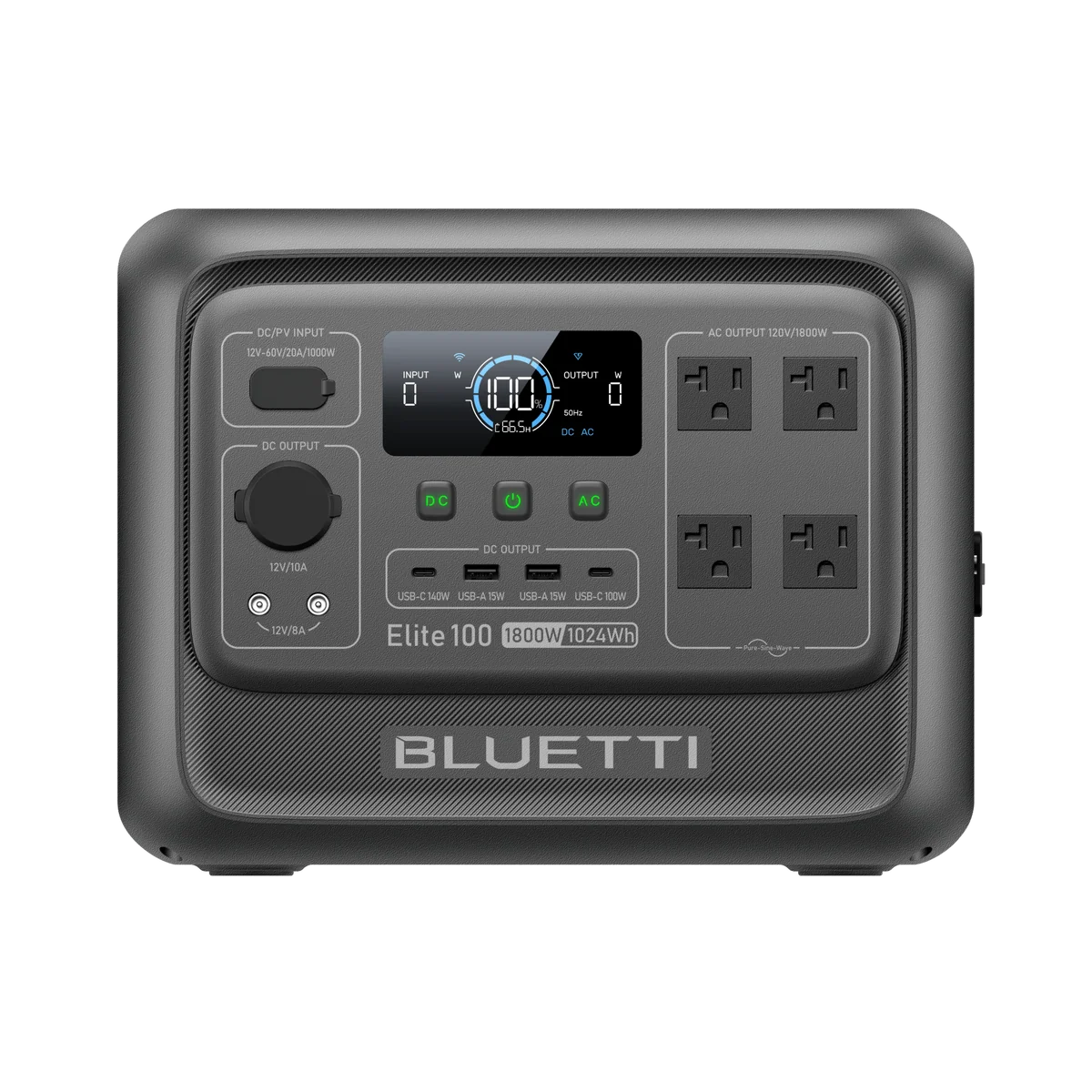
BLUETTI Elite 100 V2
Why it ranks here
A 10ms-or-less published transfer claim and 1,000W solar input suit a longer backup plan with meaningful daytime recharge.
- Direct price
- $479, checked Sep 21, 2026
- Rated capacity
- 1,024 Wh
- Continuous AC
- 1,800 W
- Published peak
- Not separately published
- Solar input
- 1,000 W
- Weight
- 25.3 lb
Value context: BLUETTI lists this at $499 and was showing $479 on the date checked.
- Best for
- A home or vehicle-supported CPAP plan with enough panel capacity to recharge during the day.
- Skip it if
- You need the lightest possible station or a separate published general surge rating for other shared loads.
What works
- Published 10ms-or-less transfer claim
- 1,000W maximum solar input
- Lowest captured direct price in the set
Tradeoffs
- 25.3 lb is heavier than Jackery
- UPS timing still requires an exact-device test
At a glance
Compare the picks before reading the full reviews
| Pick | Direct price | Capacity | AC output | Solar input | Weight | Manufacturer |
|---|---|---|---|---|---|---|
| $499 (Sep 21, 2026) | 1,070 Wh | 1,500 W | 400 W | 23.8 lb | Check Jackery |
| $529.99 (Sep 21, 2026) | 1,024 Wh | 2,000 W | 600 W | 24.9 lb | Check Anker |
| $479 (Sep 21, 2026) | 1,024 Wh | 1,800 W | 1,000 W | 25.3 lb | Check BLUETTI |
Prices are captured from official US manufacturer pages and may reflect temporary promotions. Confirm the current price with the manufacturer. Electrical fit and the full load plan take priority over price.
Original scenario analysis
What the same planning load does to every battery
Eight-hour CPAP night with humidification allowance. The table compares continuous runtime at a visible 60W AC planning load. It is not a therapy guarantee or a substitute for the machine manufacturer battery guide.
- Running load
- 60 W
- Planning start
- 60 W
- Duty cycle
- 100%
- Reserve
- 20%
- AC efficiency
- 88%
Calculated runtime on the shared load
| Product | Estimated runtime | Usable scenario energy | Direct price per rated Wh | Nameplate solar refill floor |
|---|---|---|---|---|
| Jackery Explorer 1000 v2 | 11.9 hours | 716 Wh | $0.47 | 2.7 hours |
| Anker SOLIX C1000 Gen 2 | 11.4 hours | 685 Wh | $0.52 | 1.7 hours |
| BLUETTI Elite 100 V2 | 11.4 hours | 685 Wh | $0.47 | 1.0 hours |
Longest calculated runtimeJackery Explorer 1000 v2, 11.9 hours
Lowest captured cost per rated WhJackery Explorer 1000 v2, $0.47
Shortest nameplate-input solar refill floorBLUETTI Elite 100 V2, 1.0 hours
Lightest stationJackery Explorer 1000 v2, 23.8 lb
Calculation: rated capacity × 80% after reserve × 88% AC efficiency × 95% environmental factor, divided by the cycling average load.
Prescribed pressure, mask leaks, humidifier heat, heated tubing, altitude, and the approved DC converter can change energy use. Test the exact setup before relying on it overnight.
Solar refill floor is rated capacity divided by maximum published solar input. It excludes weather, panel angle, temperature, charge taper, and conversion losses. Runtime does not prove voltage, startup, transfer, wiring, medical, flood-prevention, or combustion safety compatibility.
Research method
How we ranked CPAP backup stations
These are planning recommendations, not medical UPS certifications. The exact machine, prescribed settings, humidifier, heated tube, alarms, and approved power path determine the real order.
We compare official specifications, manuals, support records, current manufacturer pricing, and transparent planning calculations. We do not assign lab scores or claim hands-on testing that did not occur.
- Device-specific energy
- Manufacturer battery tables or measured overnight watt-hours take priority over generic CPAP estimates.
- Transfer behavior
- Published switching claims are noted, then the complete loss-of-power sequence must be tested with the exact therapy setup.
- Reserve nights
- The plan preserves at least one additional night when practical.
- Portability and recharge
- Weight, direct price, solar input, and approved DC options separate otherwise capable models.
Products considered
The complete source-reviewed field for this guide
Every eligible completed product record in this guide's capacity class appears in the ranking. This does not mean every power station on the market was reviewed, and the list is never padded with models whose critical evidence is incomplete.
Continue through this cluster
Use the next page that answers your unresolved constraint
Evidence used on this page
Important fields are tied to a specific source. Manufacturer claims, government guidance, calculations, and planning assumptions remain separate.
Provides device-specific battery tables, inverter guidance, converter guidance, and humidifier-related energy differences.
official support
- Calculation and compatibility methodology
Power Station Station
Defines capacity, efficiency, reserve, duty-cycle, voltage, continuous-output, and startup checks used across the site.
planning assumption
- Explorer 1000 v2 product specifications
Jackery US
US product page. Capacity, output, peak, chemistry, cycle life, weight, and warranty checked.
official product page
- Explorer 1000 v2 basic information
Jackery Support
Solar voltage, current, and 400W combined input limit checked.
official support
- C1000 Gen 2 product specifications
Anker SOLIX US
US page. Capacity, output, peak, input, weight, UPS, and charging claims checked.
official product page
- Portable power station collection
Anker SOLIX US
Official US collection page. Current direct C1000 Gen 2 price checked.
official product page
- C1000 Gen 2 battery support record
Anker SOLIX Support
Battery chemistry and cycle-retention claim checked.
official support
US manual. Capacity, chemistry, AC output, solar envelope, weight, UPS, and Power Lifting limitation checked.
official manual
- Elite 100 V2 product page
BLUETTI US
Cycle-life claim and current merchant destination checked.
official product page