Our answer
Match voltage, phase, frequency, receptacle, grounding, neutral behavior, continuous output, and startup demand before comparing capacity. Home wiring requires listed transfer equipment and qualified installation.
Voltage and capacity answer different questions
Voltage describes the electrical pressure and circuit configuration a load expects. Watt-hours describe stored energy. A 10kWh 120V station still cannot directly supply a 240V motor.
Continuous watts describe sustained power. Surge behavior describes short starting events. Both matter after the voltage matches.
What split phase means
Typical North American homes receive two 120V legs that are 180 degrees apart. A 240V load uses the voltage between those legs. A single 120V receptacle does not provide that relationship.
Some modular stations can pair or provide a dedicated 120/240V output. Compatibility depends on the complete system, approved accessories, and installation instructions.
A safe decision order
Read the appliance nameplate, confirm the station output configuration, verify the connection method, clear continuous and starting demand, then calculate runtime. Stop when any gate fails.
- Never connect a portable source to home wiring without listed transfer equipment.
- Never make or use a male-to-male backfeed cord.
- Have pumps, furnaces, HVAC, and panel connections reviewed professionally.
- Treat grounding and neutral instructions as compatibility requirements, not fine print.
Source-reviewed candidates
Compare the relevant product records
| Product and use | Capacity | Continuous AC | Peak AC | Weight | Direct manufacturer |
|---|---|---|---|---|---|
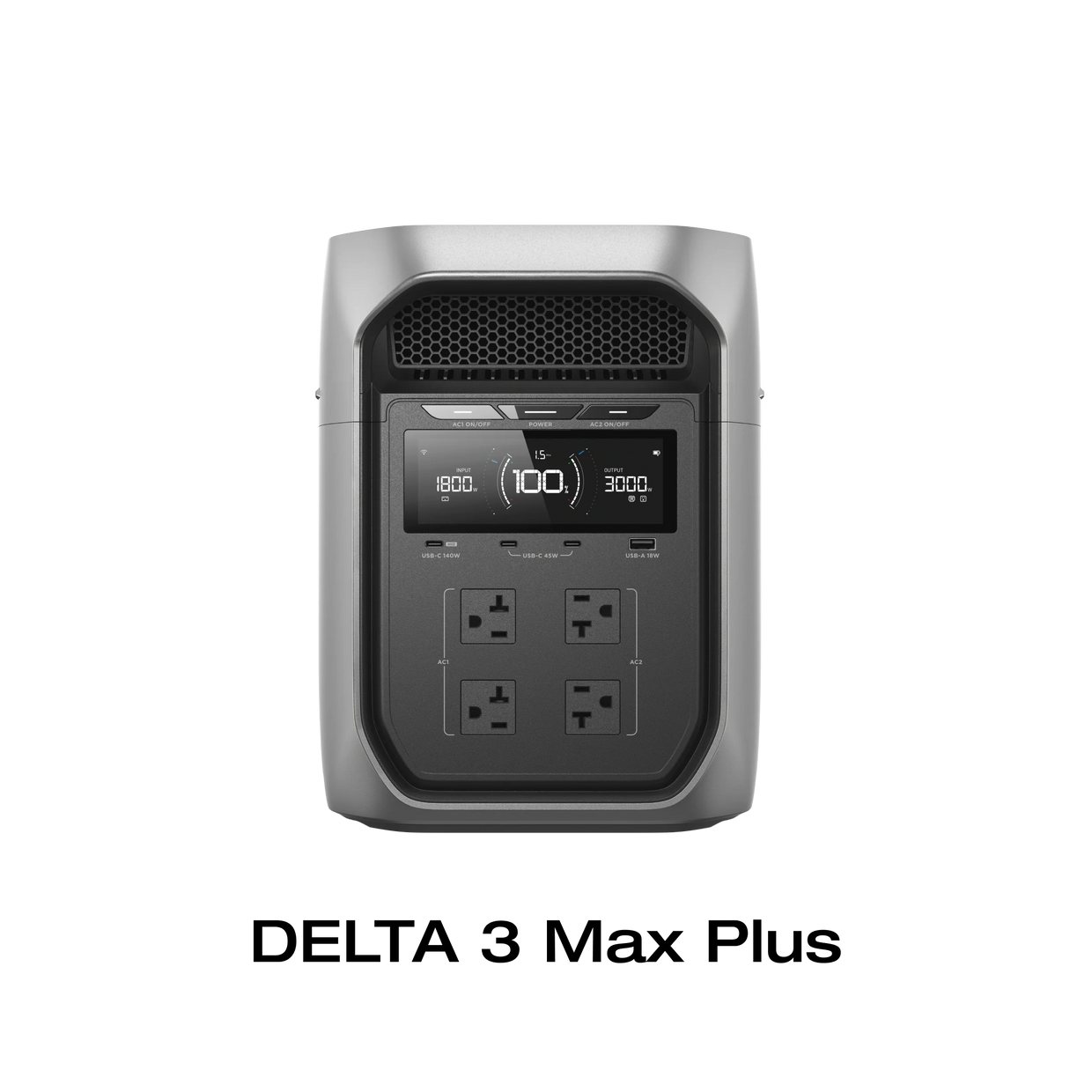 | 2,048 Wh | 3,000 W | 6,000 W | 49.6 lb | Check EcoFlow |
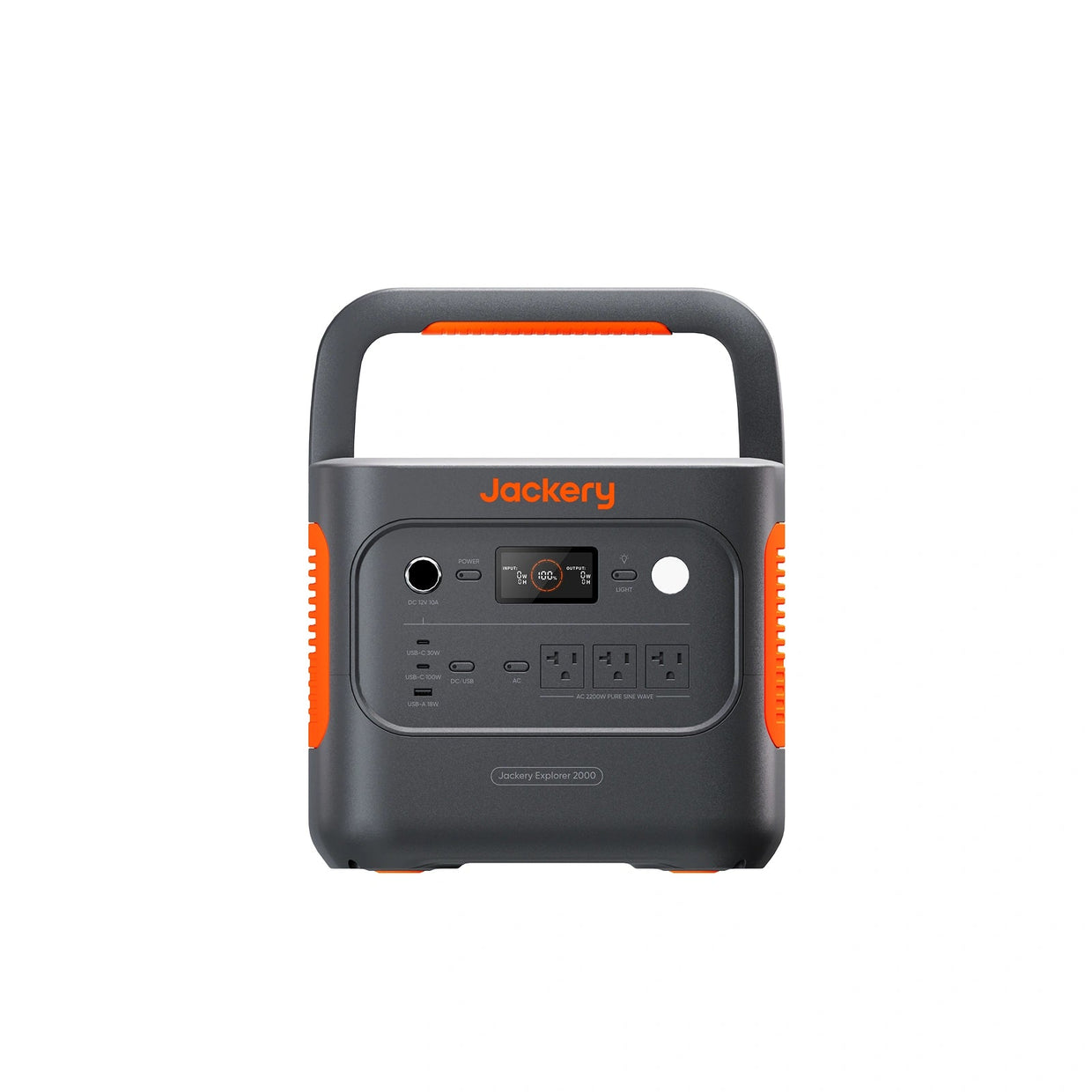 | 2,042 Wh | 2,200 W | 4,400 W | 39.5 lb | Check Jackery |
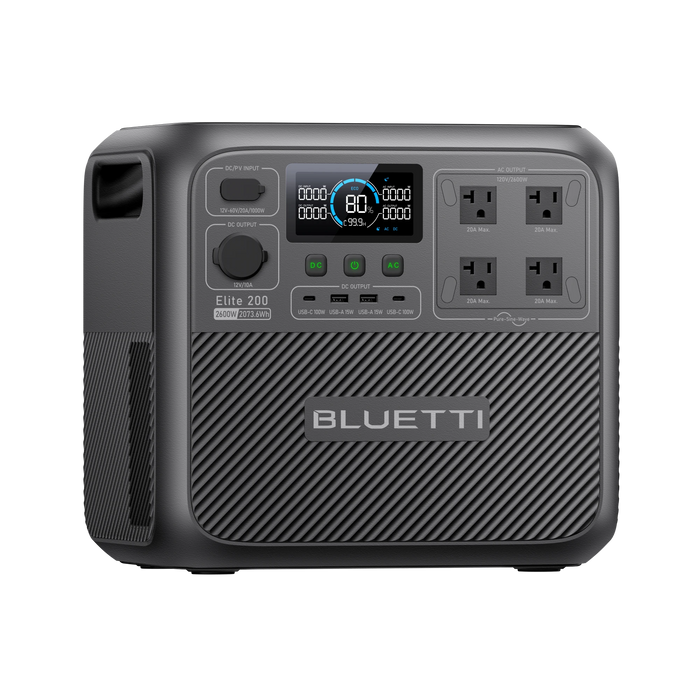 | 2,073.6 Wh | 2,600 W | Not published | 53.4 lb | Check BLUETTI |
Manufacturer boost modes are not substituted for a general surge rating. Direct manufacturer links exclude Amazon.
Continue through this cluster
Use the next page that answers your unresolved constraint
Evidence used on this page
Important fields are tied to a specific source. Manufacturer claims, government guidance, calculations, and planning assumptions remain separate.
Documents model-dependent 100 to 115V and 200 to 240V supplies, soft start, nameplate current behavior, and generator sizing guidance.
official manual
- Electrical safety requirements
Occupational Safety and Health Administration
Safety context for wiring, overcurrent protection, grounding, and listed equipment. Portable stations should not be improvised into home wiring.
government guidance
- Calculation and compatibility methodology
Power Station Station
Defines capacity, efficiency, reserve, duty-cycle, voltage, continuous-output, and startup checks used across the site.
planning assumption
- DELTA 3 Max Plus specifications
EcoFlow US
US model page. Capacity, AC output, surge, solar input, weight, transfer time, chemistry, and warranty terms checked.
official product page
- Explorer 2000 v2 specifications
Jackery US
US model page. Capacity, output, peak, chemistry, cycle claim, weight, solar pairing, UPS, and warranty checked.
official product page
Capacity, chemistry, cycle-life claim, and warranty checked.
official product page
- Elite 200 V2 user manual
BLUETTI
AC output, solar envelope, weight, UPS transfer time, and Power Lifting limitation checked.
official manual