Our answer
The six reviewed records store 2,042 to 2,073.6Wh. Jackery is lightest, EcoFlow publishes the highest surge output, and BLUETTI publishes the highest cycle-retention claim and a 1,000W solar ceiling.
When 2kWh is the better class
Choose it when the measured daily energy budget is too close to the usable limit of a 1kWh unit, when two or more essentials must run together, or when recharge access is intermittent.
Do not upsize capacity to cover an electrical mismatch. A 240V pump, unsupported startup event, or improper furnace connection still needs the right system design.
The practical comparison
Jackery carries roughly 10 to 14 lb less than the other two records. EcoFlow publishes 3,000W continuous and 6,000W surge. BLUETTI documents 2,600W continuous, 1,000W solar input, and a 6,000-cycle retention claim.
Manufacturer boost modes are not treated as universal surge ratings. BLUETTI Power Lifting is limited to suitable resistive loads, while EcoFlow X-Boost is separate from its published surge figure.
Size from a daily energy budget
Add watt-hours for every load, apply realistic duty cycles, account for AC conversion, then preserve reserve. Use the outage planner to avoid double-counting startup energy as if it were continuous.
Source-reviewed candidates
Compare the relevant product records
| Product and use | Capacity | Continuous AC | Peak AC | Weight | Direct manufacturer |
|---|---|---|---|---|---|
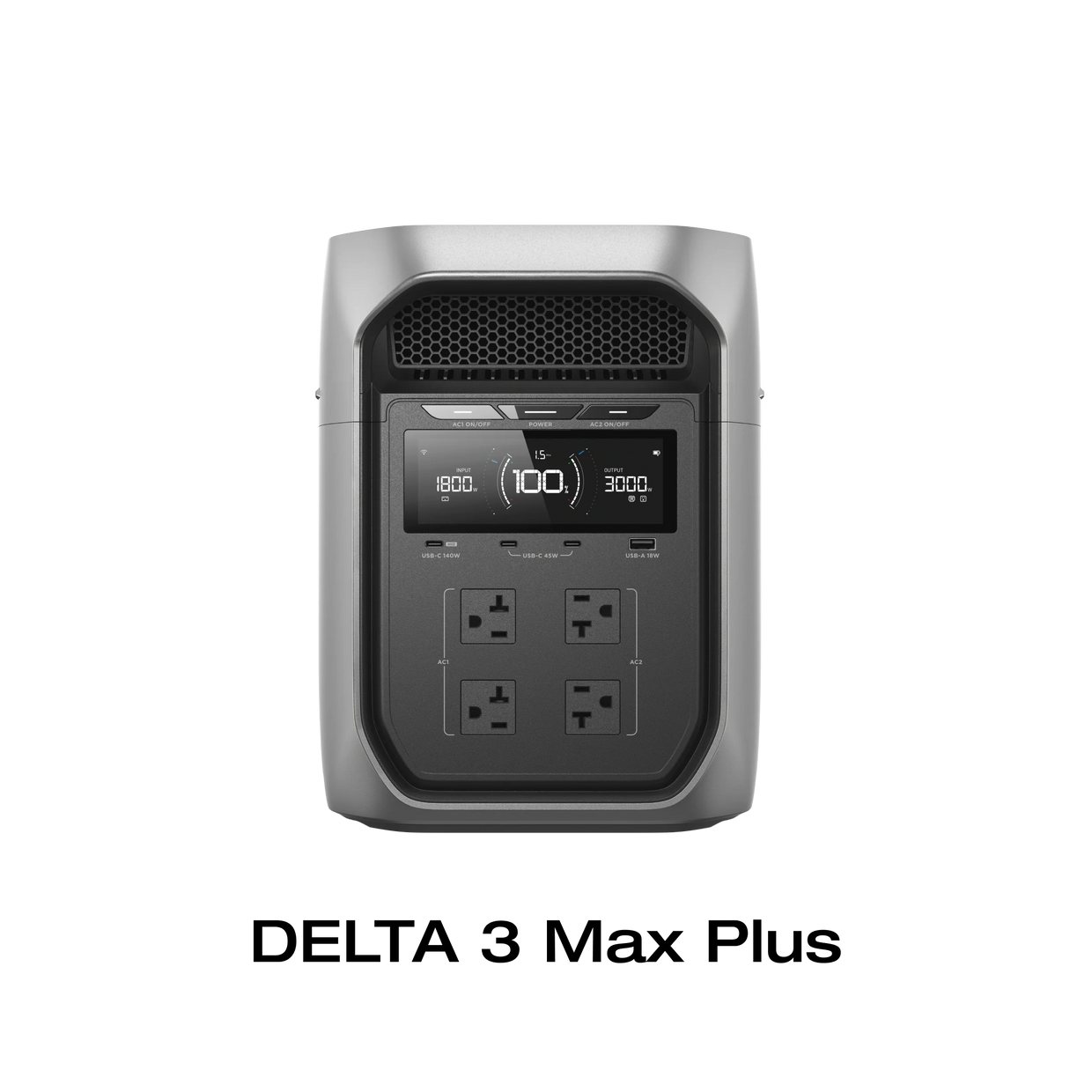 | 2,048 Wh | 3,000 W | 6,000 W | 49.6 lb | Check EcoFlow |
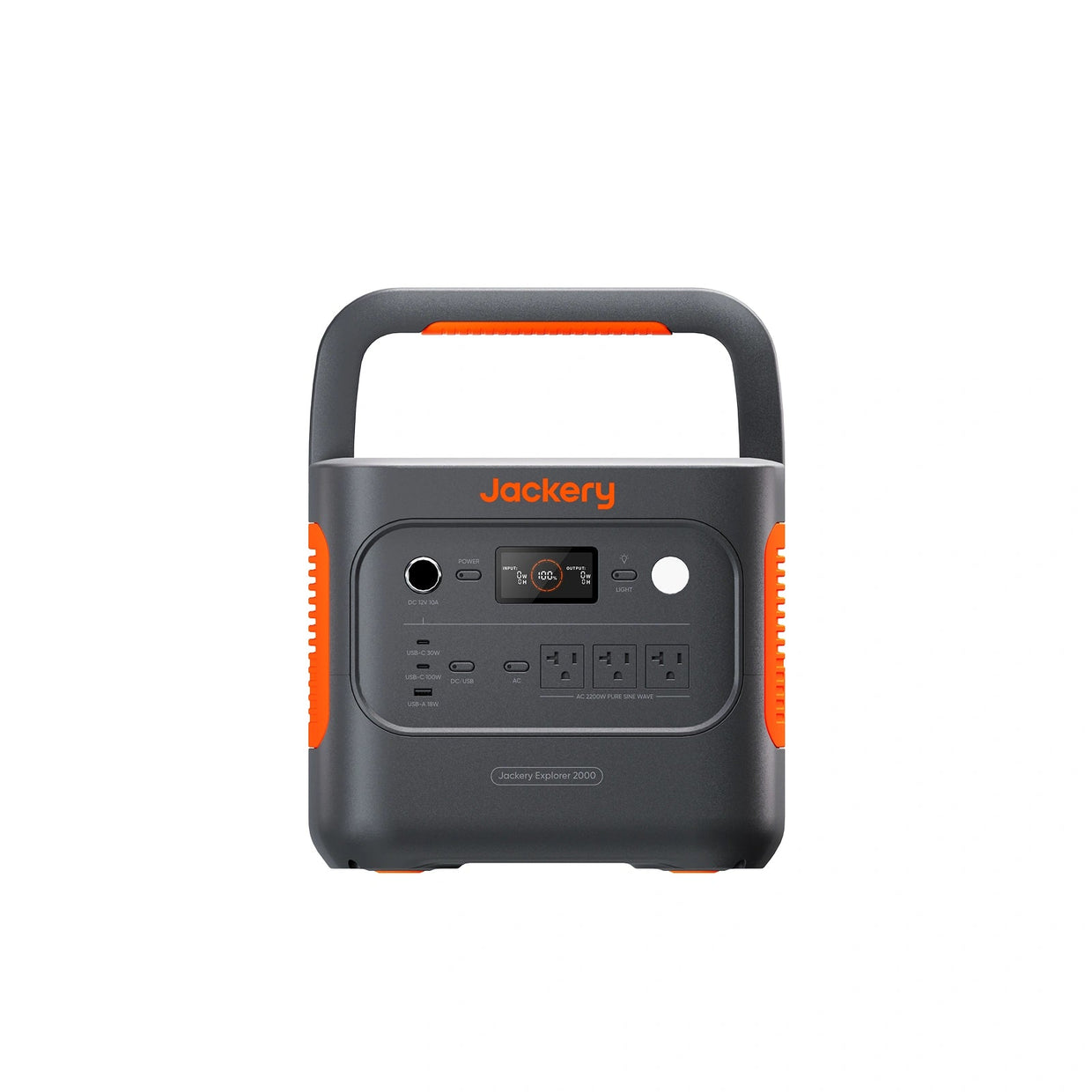 | 2,042 Wh | 2,200 W | 4,400 W | 39.5 lb | Check Jackery |
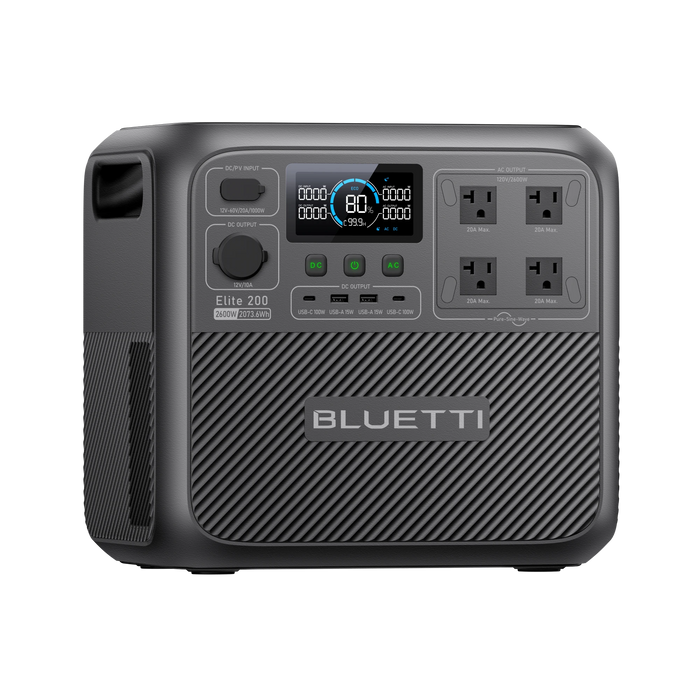 | 2,073.6 Wh | 2,600 W | Not published | 53.4 lb | Check BLUETTI |
Manufacturer boost modes are not substituted for a general surge rating. Direct manufacturer links exclude Amazon.
Continue through this cluster
Use the next page that answers your unresolved constraint
Evidence used on this page
Important fields are tied to a specific source. Manufacturer claims, government guidance, calculations, and planning assumptions remain separate.
- Calculation and compatibility methodology
Power Station Station
Defines capacity, efficiency, reserve, duty-cycle, voltage, continuous-output, and startup checks used across the site.
planning assumption
- DELTA 3 Max Plus specifications
EcoFlow US
US model page. Capacity, AC output, surge, solar input, weight, transfer time, chemistry, and warranty terms checked.
official product page
- Explorer 2000 v2 specifications
Jackery US
US model page. Capacity, output, peak, chemistry, cycle claim, weight, solar pairing, UPS, and warranty checked.
official product page
Capacity, chemistry, cycle-life claim, and warranty checked.
official product page
- Elite 200 V2 user manual
BLUETTI
AC output, solar envelope, weight, UPS transfer time, and Power Lifting limitation checked.
official manual