Our answer
EcoFlow is the strongest solar and expansion candidate, Anker publishes the highest continuous output, Jackery is the lightest, and BLUETTI combines a 1,000W solar ceiling with a roughly 25 lb body. Every choice remains conditional on the exact stove manufacturer's approved waveform, startup, operating, and shutdown requirements.
Best overall
Our first recommendation
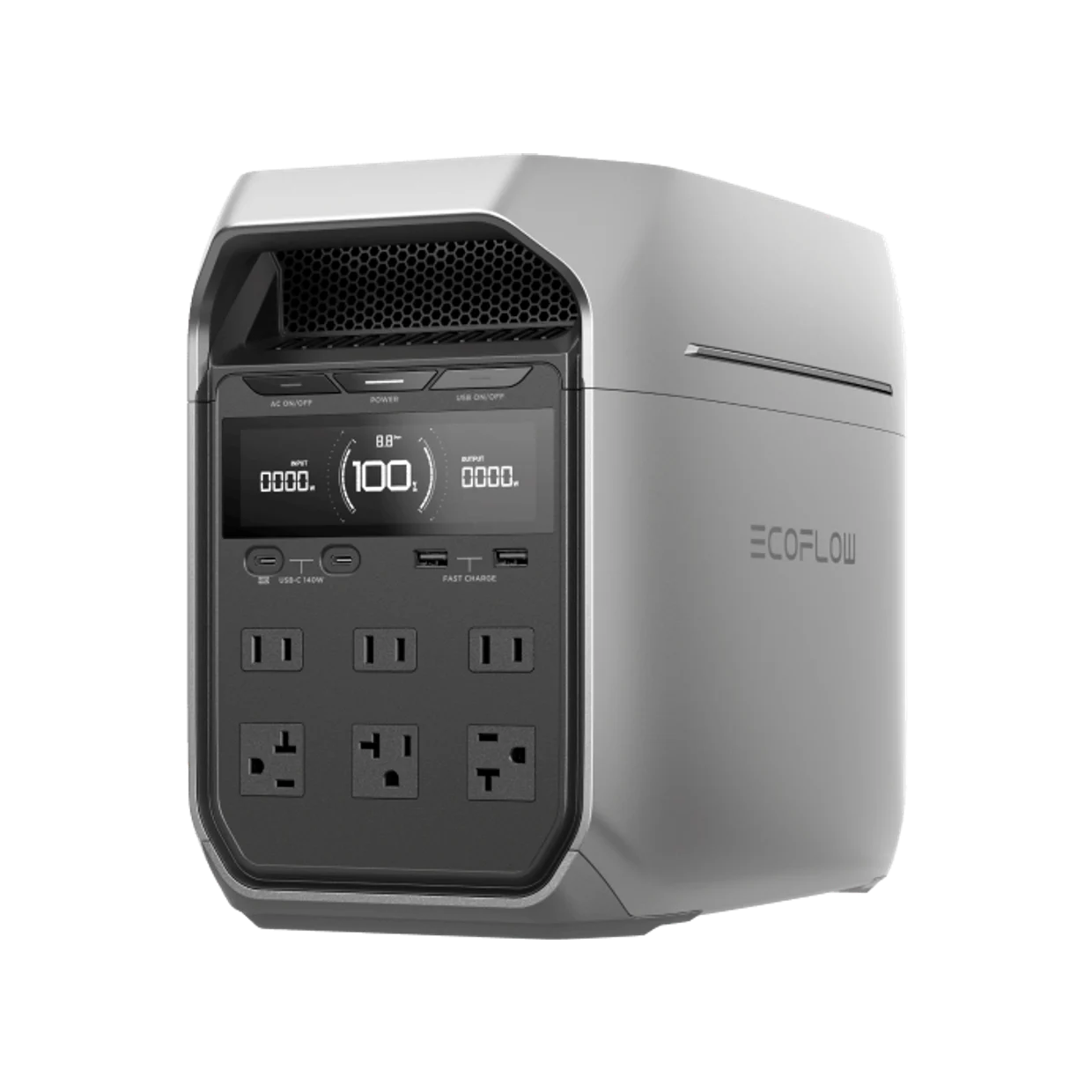
EcoFlow DELTA 3 Plus
The strongest all-around candidate when a pellet-stove plan needs high solar input, a published surge envelope, and room to expand capacity later.
- Capacity
- 1,024 Wh
- AC output
- 1,800 W
- Direct price
- $669, checked Sep 21, 2026
Quick picks
The strongest choice for each buying priority
Detailed recommendations
Why each product earned its position
Each recommendation includes the buying case, the reason to pass, current direct-price context, the specifications that affect this use, and a link to the complete source record.
Best overall
EcoFlow DELTA 3 Plus
Why it ranks here
The strongest all-around candidate when a pellet-stove plan needs high solar input, a published surge envelope, and room to expand capacity later.
- Direct price
- $669, checked Sep 21, 2026
- Rated capacity
- 1,024 Wh
- Continuous AC
- 1,800 W
- Published peak
- 3,600 W
- Solar input
- 1,000 W
- Weight
- 27.6 lb
Value context: EcoFlow lists this at $799 and was showing $130 off on the date checked. Promotional pricing moves often.
- Best for
- Longer heating plans with daytime solar recharge or future battery expansion.
- Skip it if
- The stove needs only a short shutdown reserve and lower weight is the priority.
What works
- 1,000W maximum solar input
- Published 3,600W surge rating
- Expandable beyond the built-in capacity
Tradeoffs
- Heaviest 1kWh candidate
- Added capability may be unnecessary for shutdown-only backup
Best for output headroom
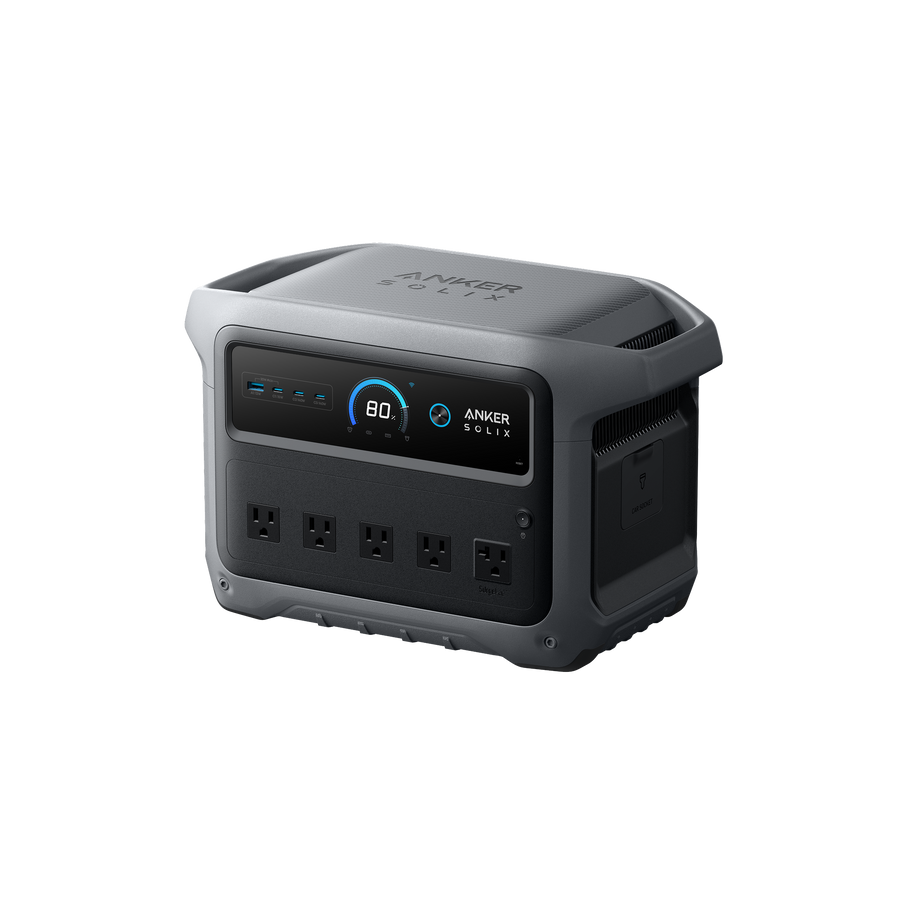
Anker SOLIX C1000 Gen 2
Why it ranks here
A high-output, fast-recharging option for stove systems whose approved power method clears the station.
- Direct price
- $529.99, checked Sep 21, 2026
- Rated capacity
- 1,024 Wh
- Continuous AC
- 2,000 W
- Published peak
- 3,000 W
- Solar input
- 600 W
- Weight
- 24.9 lb
Value context: Anker was showing $529.99 with no promotional reduction on the date checked, for the unit without a solar panel.
- Best for
- A higher-demand stove cycle or a backup plan that also carries another household load.
- Skip it if
- You need expandable capacity or 1,000W solar input.
What works
- 2,000W continuous output
- Published 3,000W peak
- Low captured direct price for the output class
Tradeoffs
- Non-expandable 1,024Wh capacity
- 600W solar ceiling
Best lightweight pick
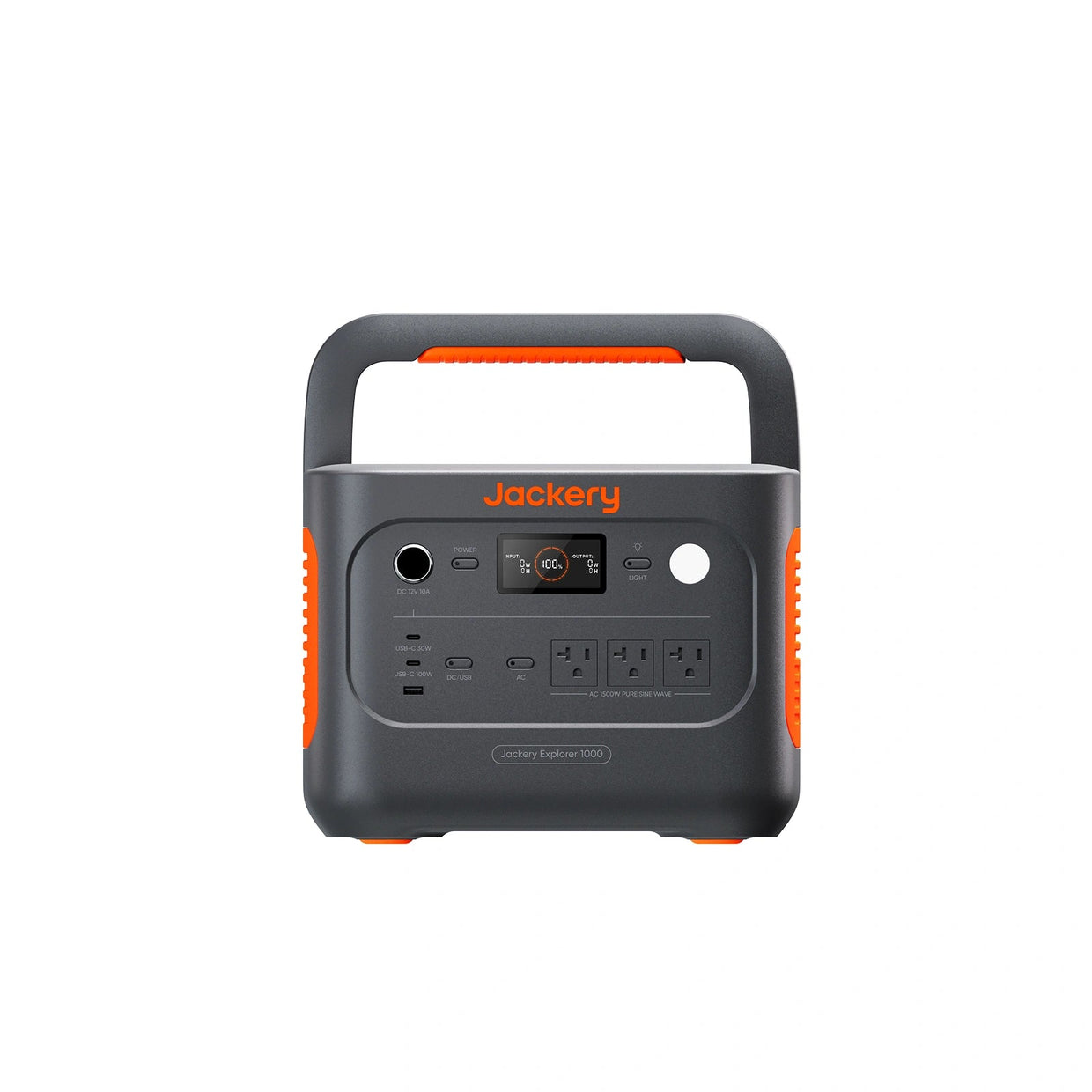
Jackery Explorer 1000 v2
Why it ranks here
The easiest 1kWh station here to carry into position before a winter storm.
- Direct price
- $499, checked Sep 21, 2026
- Rated capacity
- 1,070 Wh
- Continuous AC
- 1,500 W
- Published peak
- 3,000 W
- Solar input
- 400 W
- Weight
- 23.8 lb
Value context: Jackery lists the bare unit at $559 and was showing $499 on the date checked. This is the Basic option, without solar panels.
- Best for
- Shorter stove-backup plans where frequent carrying matters.
- Skip it if
- Solar recharge is central to a multi-day heating plan.
What works
- Lightest at 23.8 lb
- Published 3,000W surge peak
- 1,070Wh rated capacity
Tradeoffs
- 400W maximum solar input
- 1,500W continuous output is the lowest in this set
Best solar value
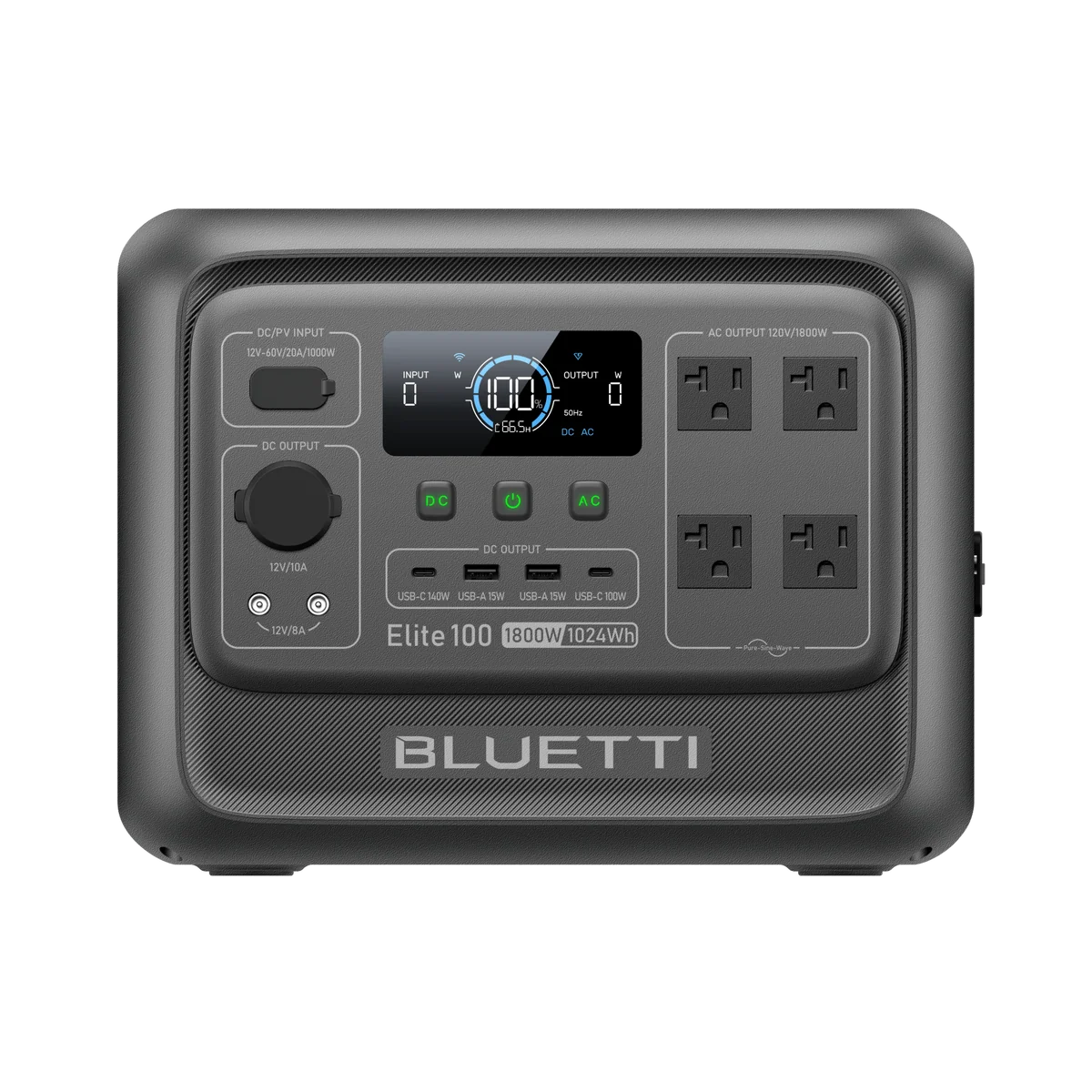
BLUETTI Elite 100 V2
Why it ranks here
A low captured direct price and 1,000W solar input make it attractive after stove compatibility has been established.
- Direct price
- $479, checked Sep 21, 2026
- Rated capacity
- 1,024 Wh
- Continuous AC
- 1,800 W
- Published peak
- Not separately published
- Solar input
- 1,000 W
- Weight
- 25.3 lb
Value context: BLUETTI lists this at $499 and was showing $479 on the date checked.
- Best for
- A measured stove profile supported by a high-throughput solar recharge plan.
- Skip it if
- You need a published general surge figure to approve the stove setup.
What works
- 1,000W maximum solar input
- 25.3 lb body
- Lowest captured direct price in the group
Tradeoffs
- No separate general surge rating found
- Power Lifting does not establish motor compatibility
At a glance
Compare the picks before reading the full reviews
| Pick | Direct price | Capacity | AC output | Solar input | Weight | Manufacturer |
|---|---|---|---|---|---|---|
| $669 (Sep 21, 2026) | 1,024 Wh | 1,800 W | 1,000 W | 27.6 lb | Check EcoFlow |
| $529.99 (Sep 21, 2026) | 1,024 Wh | 2,000 W | 600 W | 24.9 lb | Check Anker |
| $499 (Sep 21, 2026) | 1,070 Wh | 1,500 W | 400 W | 23.8 lb | Check Jackery |
| $479 (Sep 21, 2026) | 1,024 Wh | 1,800 W | 1,000 W | 25.3 lb | Check BLUETTI |
Prices are captured from official US manufacturer pages and may reflect temporary promotions. Confirm the current price with the manufacturer. Electrical fit and the full load plan take priority over price.
Original scenario analysis
What the same planning load does to every battery
Steady pellet-stove operation after ignition. The comparison uses a visible steady-load planning case. It does not replace the complete ignition, feed, blower, and controlled-shutdown profile for the exact stove.
- Running load
- 100 W
- Planning start
- 500 W
- Duty cycle
- 100%
- Reserve
- 20%
- AC efficiency
- 88%
Calculated runtime on the shared load
| Product | Estimated runtime | Usable scenario energy | Direct price per rated Wh | Nameplate solar refill floor |
|---|---|---|---|---|
| EcoFlow DELTA 3 Plus | 6.8 hours | 685 Wh | $0.65 | 1.0 hours |
| Anker SOLIX C1000 Gen 2 | 6.8 hours | 685 Wh | $0.52 | 1.7 hours |
| Jackery Explorer 1000 v2 | 7.2 hours | 716 Wh | $0.47 | 2.7 hours |
| BLUETTI Elite 100 V2 | 6.8 hours | 685 Wh | $0.47 | 1.0 hours |
Longest calculated runtimeJackery Explorer 1000 v2, 7.2 hours
Lowest captured cost per rated WhJackery Explorer 1000 v2, $0.47
Shortest nameplate-input solar refill floorEcoFlow DELTA 3 Plus, 1.0 hours
Lightest stationJackery Explorer 1000 v2, 23.8 lb
Calculation: rated capacity × 80% after reserve × 88% AC efficiency × 95% environmental factor, divided by the cycling average load.
The cited Harman inverter sizes are not stove-consumption figures. Replace this planning case with a measured complete cycle and the backup instructions for the exact stove.
Solar refill floor is rated capacity divided by maximum published solar input. It excludes weather, panel angle, temperature, charge taper, and conversion losses. Runtime does not prove voltage, startup, transfer, wiring, medical, flood-prevention, or combustion safety compatibility.
Research method
How we ranked pellet-stove backup stations
No station earns a recommendation until the stove accepts its waveform, startup behavior, and shutdown method. The ranking separates the remaining choices by solar, output, weight, and value.
We compare official specifications, manuals, support records, current manufacturer pricing, and transparent planning calculations. We do not assign lab scores or claim hands-on testing that did not occur.
- Safe shutdown first
- The station must preserve blower operation while the fire and exhaust cool.
- Waveform and startup
- Pure sine wave and the complete ignition, feed, blower, and shutdown sequence take priority over rated capacity.
- Runtime reserve
- A complete burn and shutdown cycle is modeled with at least 20% reserve.
- Recharge and value
- Solar input and direct price matter only after the stove-specific electrical gates are cleared.
Products considered
The complete source-reviewed field for this guide
Every eligible completed product record in this guide's capacity class appears in the ranking. This does not mean every power station on the market was reviewed, and the list is never padded with models whose critical evidence is incomplete.
- First requirement
- Controlled shutdownThe combustion blower must continue moving exhaust while the fire cools.
- Published reference
- 700 to 1,000 WHarman-tested inverter and charger ratings, not a generic running-watt estimate.
- Selection order
- Compatibility, then runtimeWaveform and operating behavior must clear before capacity becomes useful.
Questions that change the decision
Will a 1,000Wh power station run a pellet stove overnight?
It may, but rated capacity alone cannot answer the question. Use the exact stove cycle, approved power method, conversion losses, and shutdown reserve.
Why is safe shutdown more important than estimated runtime?
The combustion blower may need to keep moving exhaust while the fire cools. Losing that airflow can create smoke and exhaust risks even if the outage begins near the end of a heating cycle.
Continue through this cluster
Use the next page that answers your unresolved constraint
Evidence used on this page
Important fields are tied to a specific source. Manufacturer claims, government guidance, calculations, and planning assumptions remain separate.
Manufacturer guidance distinguishes safe shutdown from continued operation and documents tested 700W, 750W, and 1,000W inverter/charger options.
official support
- Calculation and compatibility methodology
Power Station Station
Defines capacity, efficiency, reserve, duty-cycle, voltage, continuous-output, and startup checks used across the site.
planning assumption
- DELTA 3 Plus product specifications
EcoFlow US
US product page. Capacity, output, solar input, cycle life, weight, UPS, and warranty checked.
official product page
- C1000 Gen 2 product specifications
Anker SOLIX US
US page. Capacity, output, peak, input, weight, UPS, and charging claims checked.
official product page
- Portable power station collection
Anker SOLIX US
Official US collection page. Current direct C1000 Gen 2 price checked.
official product page
- C1000 Gen 2 battery support record
Anker SOLIX Support
Battery chemistry and cycle-retention claim checked.
official support
- Explorer 1000 v2 product specifications
Jackery US
US product page. Capacity, output, peak, chemistry, cycle life, weight, and warranty checked.
official product page
- Explorer 1000 v2 basic information
Jackery Support
Solar voltage, current, and 400W combined input limit checked.
official support
US manual. Capacity, chemistry, AC output, solar envelope, weight, UPS, and Power Lifting limitation checked.
official manual
- Elite 100 V2 product page
BLUETTI US
Cycle-life claim and current merchant destination checked.
official product page