Sourced specification record
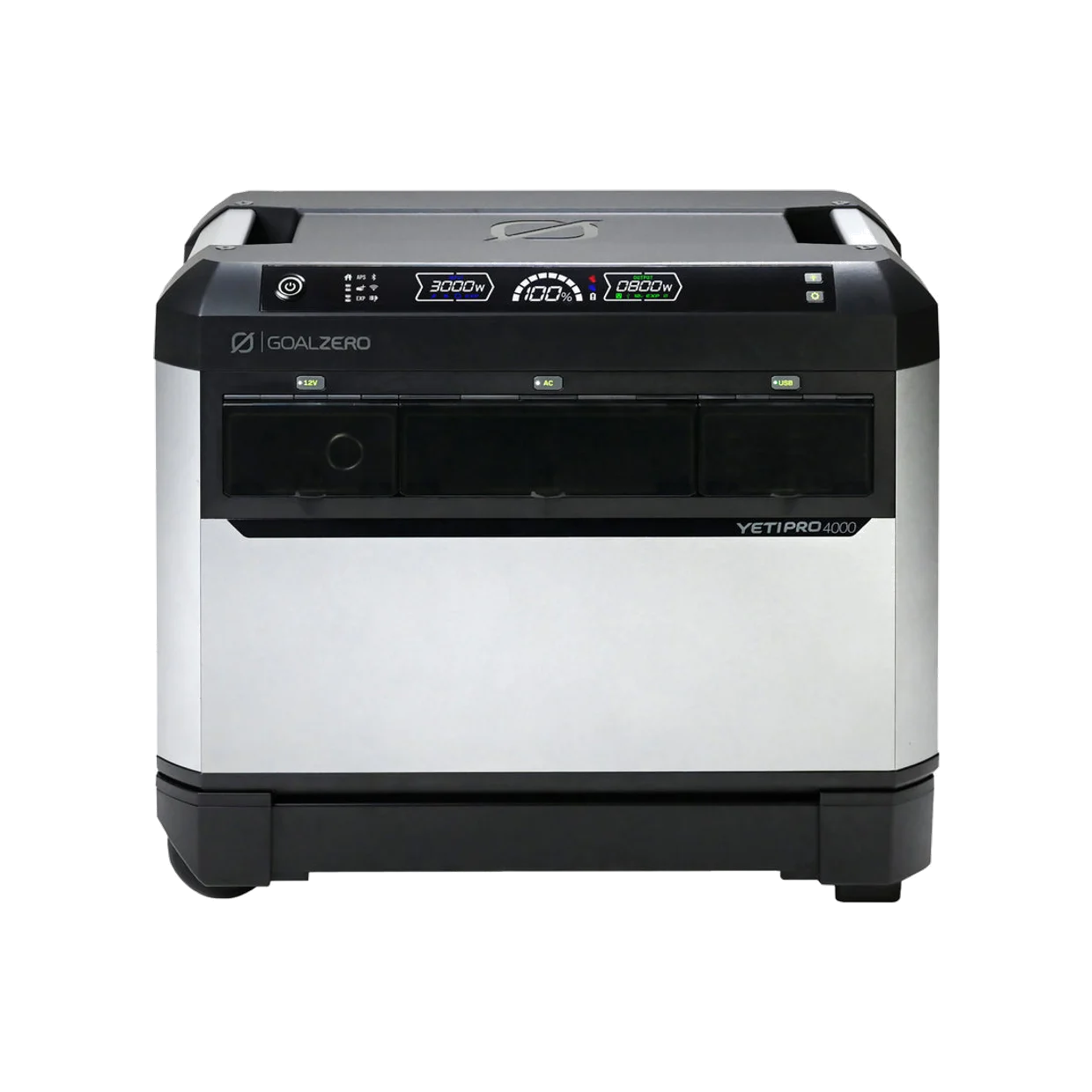
Goal Zero Yeti PRO 4000
A 4kWh station with a 3,600W inverter and an unusually wide 13.3V to 150V high-voltage solar input accepting up to 3,000W.
Direct manufacturer route. Amazon is excluded. This record uses published source material, not a hands-on test.
- Rated energy
- 3993.6 Wh
- Continuous AC
- 3600 W
- Solar ceiling
- 3000 W
- Carry weight
- 115.7 lb
Decision summary
Where this model earns its place
How the record reads
Energy, output, and the appliance are three separate gates
The battery decides duration. The inverter decides whether a load can run and start. The appliance decides the voltage, connection, and surge demand that must be met.
LiFePO4
7,200 W published peak
Voltage, connector, startup, and operating mode
Resolved specification set
The numbers that change a real purchase decision
3,600 Wcontinuous output against the 3,000W field maximum
Published alongside the continuous rating as inverter surge.
High Power Port, 13.3V to 150V at up to 30A. A separate 8 mm input accepts 275W across 12.3V to 28V at up to 10A.
Unit only. Goal Zero publishes 125.7 lb with the cart fitted.
Refrigerator planning profile
An estimated 61.4 hours from the visible defaults
This calculation uses a 150W running load, 1,200W starting load, 33% duty cycle, 90% usable capacity, and 88% AC efficiency. It is planning math, not a measured refrigerator test.
Published output clears this conservative load profile.
Source ledger
Important fields are tied to a specific source. Manufacturer claims, government guidance, calculations, and planning assumptions remain separate.
Published specification table covering capacity, chemistry, lifecycles, inverter output, both solar input channels with their voltage and current limits, weight, and warranty.
official product page