Our answer
For a measured, electrically compatible 120V furnace, EcoFlow offers the largest published output envelope, Jackery minimizes weight, and BLUETTI combines 2,600W continuous output with a high cycle-life claim. Professional connection review comes before the ranking.
Best overall
Our first recommendation
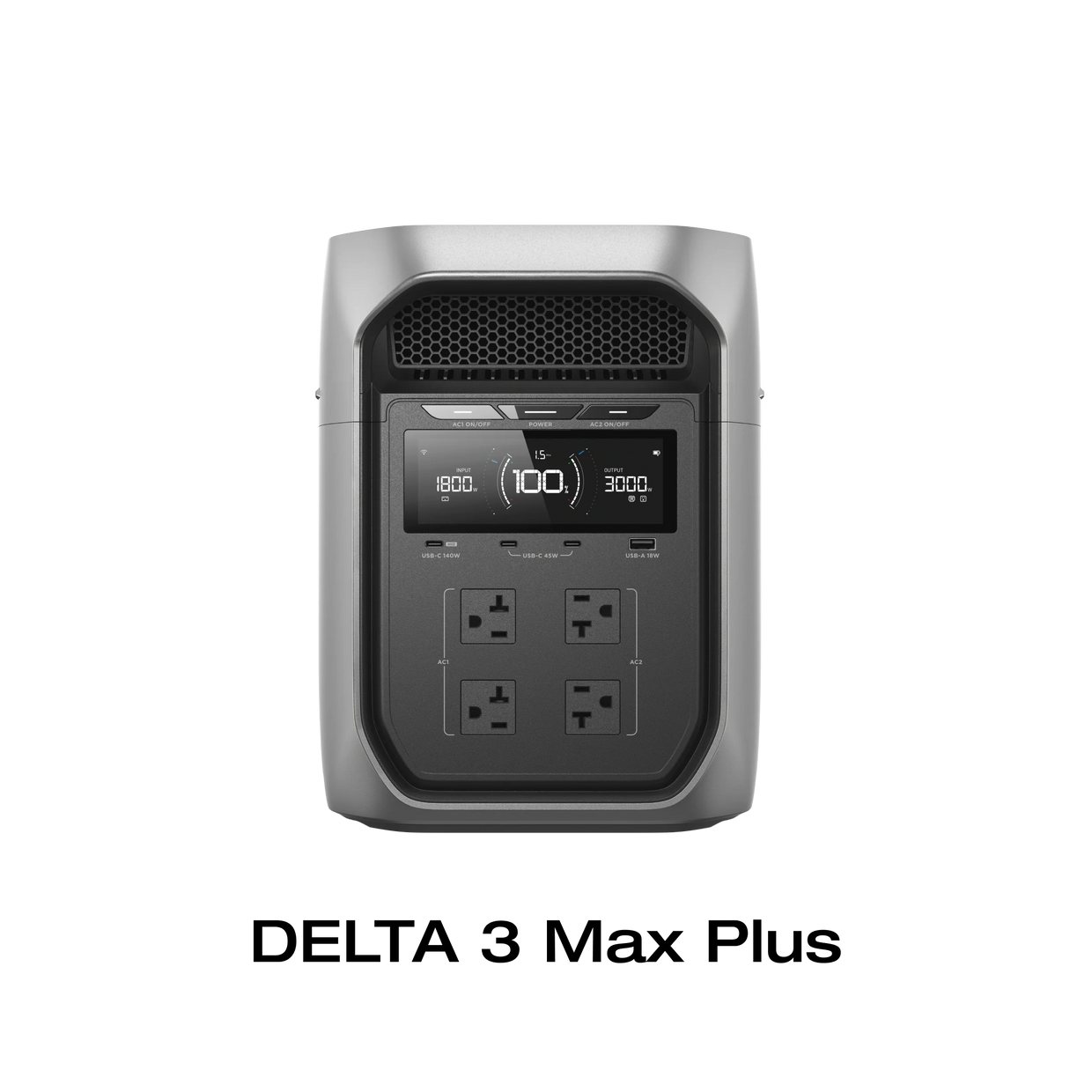
EcoFlow DELTA 3 Max Plus
The strongest output envelope for a professionally reviewed furnace-backup plan and the most room for additional essential loads.
- Capacity
- 2,048 Wh
- AC output
- 3,000 W
- Direct price
- $1,149, checked Sep 21, 2026
Quick picks
The strongest choice for each buying priority
Detailed recommendations
Why each product earned its position
Each recommendation includes the buying case, the reason to pass, current direct-price context, the specifications that affect this use, and a link to the complete source record.
Best overall
EcoFlow DELTA 3 Max Plus
Why it ranks here
The strongest output envelope for a professionally reviewed furnace-backup plan and the most room for additional essential loads.
- Direct price
- $1,149, checked Sep 21, 2026
- Rated capacity
- 2,048 Wh
- Continuous AC
- 3,000 W
- Published peak
- 6,000 W
- Solar input
- 1,000 W
- Weight
- 49.6 lb
Value context: EcoFlow lists this at $1,599 and was showing $450 off on the date checked. Promotional pricing moves often.
- Best for
- A measured furnace with meaningful blower startup and a broader home-outage plan.
- Skip it if
- The furnace load is modest and a lighter, less expensive 2kWh station clears every requirement.
What works
- 3,000W continuous output
- Published 6,000W surge
- Expandable 2kWh platform
Tradeoffs
- Highest captured direct price
- 49.6 lb body
Best for easier handling
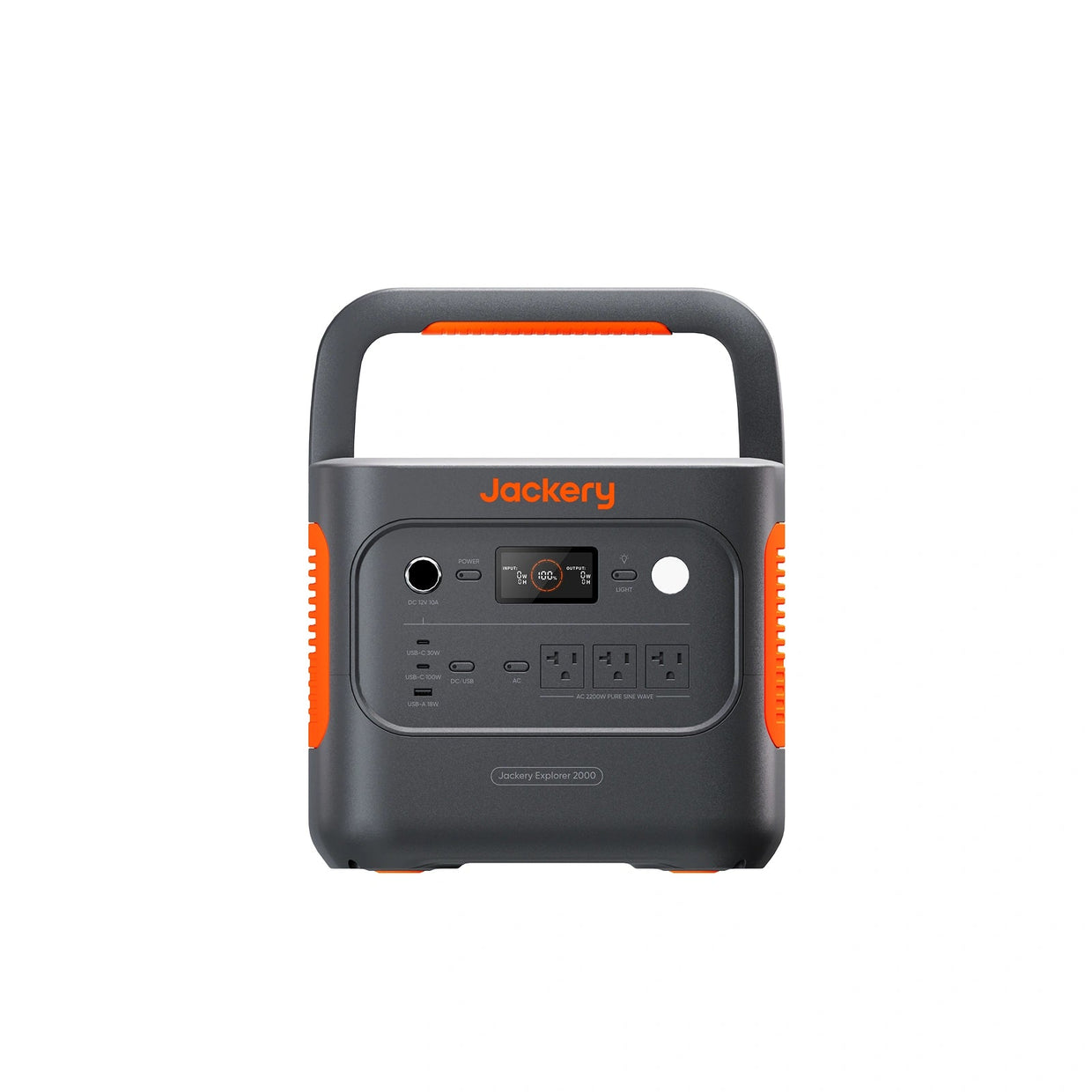
Jackery Explorer 2000 v2
Why it ranks here
A 2kWh furnace candidate with a published peak rating and substantially less weight than the other two.
- Direct price
- $899, checked Sep 21, 2026
- Rated capacity
- 2,042 Wh
- Continuous AC
- 2,200 W
- Published peak
- 4,400 W
- Solar input
- 400 W
- Weight
- 39.5 lb
Value context: Jackery lists the bare unit at $999 and was showing $899 on the date checked.
- Best for
- A furnace that clears 2,200W continuous and 4,400W peak, especially when the station must be moved.
- Skip it if
- Your measured blower start needs the larger EcoFlow envelope.
What works
- 39.5 lb weight
- Published 4,400W peak
- 2,042Wh rated capacity
Tradeoffs
- 400W documented solar configuration
- Not expandable
Best continuous-output value
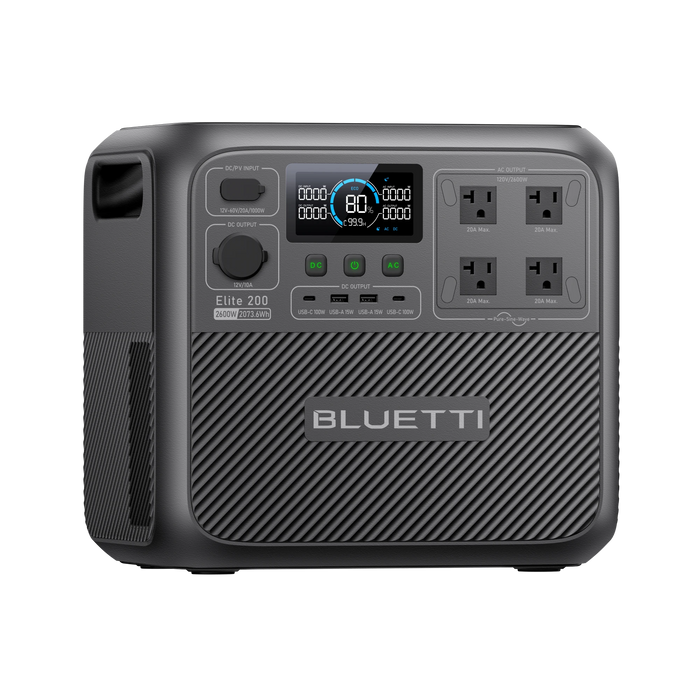
BLUETTI Elite 200 V2
Why it ranks here
Strong sustained output, high solar input, and the lowest captured direct price in the group for a furnace with verified startup compatibility.
- Direct price
- $849, checked Sep 21, 2026
- Rated capacity
- 2,073.6 Wh
- Continuous AC
- 2,600 W
- Published peak
- Not separately published
- Solar input
- 1,000 W
- Weight
- 53.4 lb
Value context: BLUETTI lists this at $899 and was showing $849 on the date checked.
- Best for
- A measured furnace profile below 2,600W continuous where solar recharge matters.
- Skip it if
- You need a published general surge figure for blower approval.
What works
- 2,600W continuous output
- 1,000W maximum solar input
- Lowest captured direct price
Tradeoffs
- No general surge rating used in this record
- Heaviest at 53.4 lb
At a glance
Compare the picks before reading the full reviews
| Pick | Direct price | Capacity | AC output | Solar input | Weight | Manufacturer |
|---|---|---|---|---|---|---|
| $1,149 (Sep 21, 2026) | 2,048 Wh | 3,000 W | 1,000 W | 49.6 lb | Check EcoFlow |
| $899 (Sep 21, 2026) | 2,042 Wh | 2,200 W | 400 W | 39.5 lb | Check Jackery |
| $849 (Sep 21, 2026) | 2,073.6 Wh | 2,600 W | 1,000 W | 53.4 lb | Check BLUETTI |
Prices are captured from official US manufacturer pages and may reflect temporary promotions. Confirm the current price with the manufacturer. Electrical fit and the full load plan take priority over price.
Original scenario analysis
What the same planning load does to every battery
120V gas-furnace heating cycle. The scenario represents a furnace blower and controls cycling through a cold-weather outage after a listed connection method has been approved.
- Running load
- 600 W
- Planning start
- 1,800 W
- Duty cycle
- 50%
- Reserve
- 20%
- AC efficiency
- 88%
Calculated runtime on the shared load
| Product | Estimated runtime | Usable scenario energy | Direct price per rated Wh | Nameplate solar refill floor |
|---|---|---|---|---|
| EcoFlow DELTA 3 Max Plus | 4.5 hours | 1,370 Wh | $0.56 | 2.0 hours |
| Jackery Explorer 2000 v2 | 4.5 hours | 1,366 Wh | $0.44 | 5.1 hours |
| BLUETTI Elite 200 V2 | 4.6 hours | 1,387 Wh | $0.41 | 2.1 hours |
Longest calculated runtimeBLUETTI Elite 200 V2, 4.6 hours
Lowest captured cost per rated WhBLUETTI Elite 200 V2, $0.41
Shortest nameplate-input solar refill floorEcoFlow DELTA 3 Max Plus, 2.0 hours
Lightest stationJackery Explorer 2000 v2, 39.5 lb
Calculation: rated capacity × 80% after reserve × 88% AC efficiency × 95% environmental factor, divided by the cycling average load.
Motor type, thermostat calls, ignition, condensate equipment, neutral behavior, and connection method can change the answer. Measure the complete furnace cycle and use a qualified installer for hardwired work.
Solar refill floor is rated capacity divided by maximum published solar input. It excludes weather, panel angle, temperature, charge taper, and conversion losses. Runtime does not prove voltage, startup, transfer, wiring, medical, flood-prevention, or combustion safety compatibility.
Research method
How we ranked gas-furnace backup stations
Every recommendation assumes a measured, electrically compatible 120V furnace and a listed connection method reviewed for the exact installation.
We compare official specifications, manuals, support records, current manufacturer pricing, and transparent planning calculations. We do not assign lab scores or claim hands-on testing that did not occur.
- Connection safety
- Transfer equipment, neutral behavior, grounding, and furnace controls are pass or fail requirements.
- Blower startup
- Motor startup evidence is evaluated separately from continuous output.
- Heating-cycle energy
- Runtime is based on measured ignition, blower, and control energy across complete cycles.
- Shared outage value
- Weight, solar, price, and spare inverter headroom matter after the furnace clears the electrical review.
Products considered
The complete source-reviewed field for this guide
Every eligible completed product record in this guide's capacity class appears in the ranking. This does not mean every power station on the market was reviewed, and the list is never padded with models whose critical evidence is incomplete.
Continue through this cluster
Use the next page that answers your unresolved constraint
Evidence used on this page
Important fields are tied to a specific source. Manufacturer claims, government guidance, calculations, and planning assumptions remain separate.
- Energy Conservation Standards for Residential Furnace Fans
U.S. Department of Energy
Supports the need to distinguish blower operating modes and motor behavior. It does not establish one universal furnace wattage.
government data
- Electrical safety requirements
Occupational Safety and Health Administration
Safety context for wiring, overcurrent protection, grounding, and listed equipment. Portable stations should not be improvised into home wiring.
government guidance
- Calculation and compatibility methodology
Power Station Station
Defines capacity, efficiency, reserve, duty-cycle, voltage, continuous-output, and startup checks used across the site.
planning assumption
- DELTA 3 Max Plus specifications
EcoFlow US
US model page. Capacity, AC output, surge, solar input, weight, transfer time, chemistry, and warranty terms checked.
official product page
- Explorer 2000 v2 specifications
Jackery US
US model page. Capacity, output, peak, chemistry, cycle claim, weight, solar pairing, UPS, and warranty checked.
official product page
Capacity, chemistry, cycle-life claim, and warranty checked.
official product page
- Elite 200 V2 user manual
BLUETTI
AC output, solar envelope, weight, UPS transfer time, and Power Lifting limitation checked.
official manual