Our answer
Jackery is the lightest of the three selected 1kWh records, BLUETTI offers 1,000W solar input at about 25 lb, and Anker combines 2,000W AC output with fast recharge. The best choice depends on whether Starlink runs alone or shares power with a wider outage kit.
Best overall
Our first recommendation
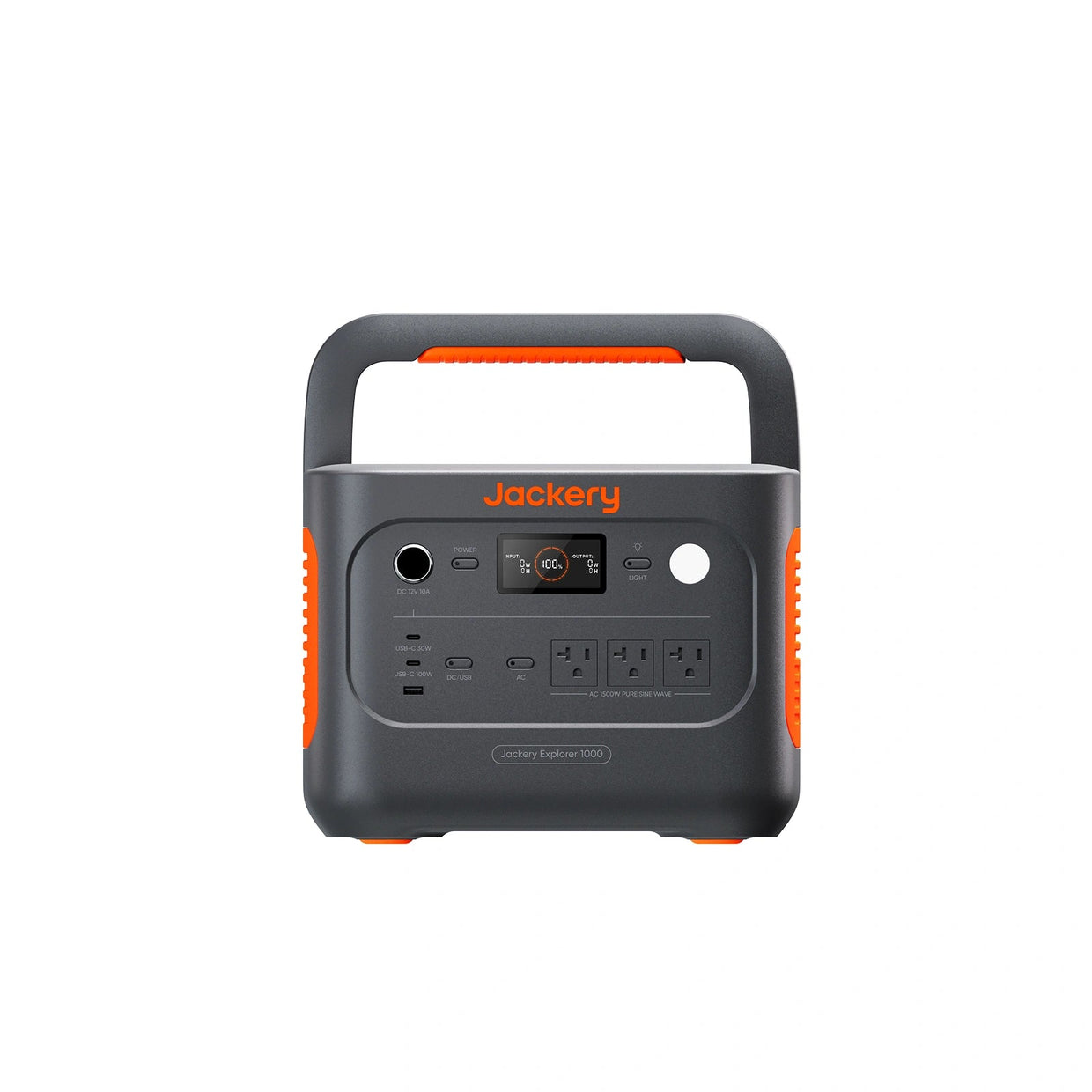
Jackery Explorer 1000 v2
The lightest current 1kWh choice is the most balanced fit for a mobile communications kit that does not need extreme inverter output.
- Capacity
- 1,070 Wh
- AC output
- 1,500 W
- Direct price
- $499, checked Sep 21, 2026
Quick picks
The strongest choice for each buying priority
Detailed recommendations
Why each product earned its position
Each recommendation includes the buying case, the reason to pass, current direct-price context, the specifications that affect this use, and a link to the complete source record.
Best overall
Jackery Explorer 1000 v2
Why it ranks here
The lightest current 1kWh choice is the most balanced fit for a mobile communications kit that does not need extreme inverter output.
- Direct price
- $499, checked Sep 21, 2026
- Rated capacity
- 1,070 Wh
- Continuous AC
- 1,500 W
- Published peak
- 3,000 W
- Solar input
- 400 W
- Weight
- 23.8 lb
Value context: Jackery lists the bare unit at $559 and was showing $499 on the date checked. This is the Basic option, without solar panels.
- Best for
- Starlink Mini, phones, a laptop, and basic lighting in a portable field setup.
- Skip it if
- You plan to recover most of the battery from solar during a short daylight window.
What works
- Lightest at 23.8 lb
- Low captured direct price
- 1,070Wh rated capacity
Tradeoffs
- 400W maximum solar input
- A 1kWh station may still be excessive for Starlink alone
Best for solar recharge
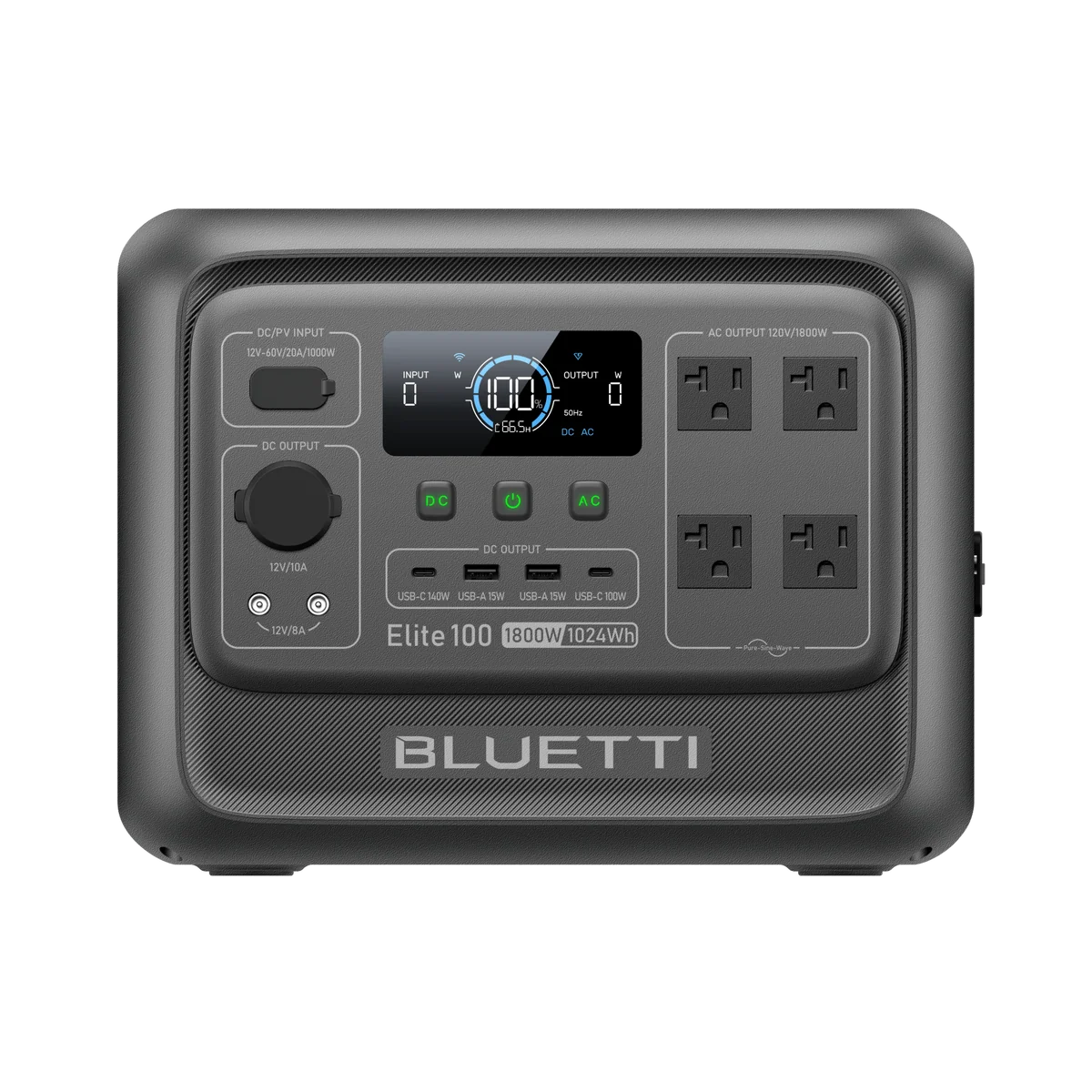
BLUETTI Elite 100 V2
Why it ranks here
A 1,000W solar ceiling and low captured direct price suit a field kit with enough panel area to use that input.
- Direct price
- $479, checked Sep 21, 2026
- Rated capacity
- 1,024 Wh
- Continuous AC
- 1,800 W
- Published peak
- Not separately published
- Solar input
- 1,000 W
- Weight
- 25.3 lb
Value context: BLUETTI lists this at $499 and was showing $479 on the date checked.
- Best for
- Longer off-grid communications where daytime solar recovery is the priority.
- Skip it if
- You carry only a small panel or rely mainly on vehicle and wall charging.
What works
- 1,000W maximum solar input
- 25.3 lb body
- Lowest captured direct price in this set
Tradeoffs
- Higher solar capability can be wasted with a small panel array
- No general surge rating, although surge is usually not the limiting Starlink issue
Best for a shared high-output kit
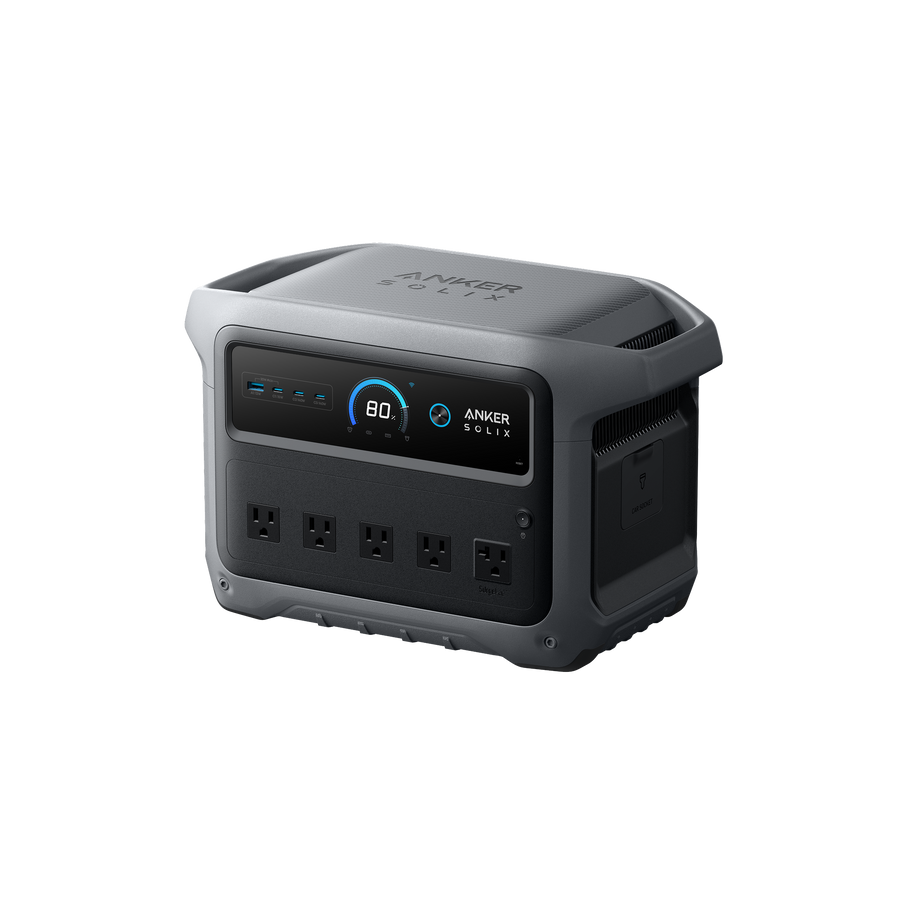
Anker SOLIX C1000 Gen 2
Why it ranks here
More inverter headroom and fast AC recharge make sense when Starlink shares the station with cooking, tools, or other short high-power loads.
- Direct price
- $529.99, checked Sep 21, 2026
- Rated capacity
- 1,024 Wh
- Continuous AC
- 2,000 W
- Published peak
- 3,000 W
- Solar input
- 600 W
- Weight
- 24.9 lb
Value context: Anker was showing $529.99 with no promotional reduction on the date checked, for the unit without a solar panel.
- Best for
- A communications station that also serves higher-output equipment.
- Skip it if
- Starlink and small electronics are the only loads.
What works
- 2,000W continuous output
- 49-minute fast-charge claim
- 24.9 lb body
Tradeoffs
- Non-expandable capacity
- Extra output adds little value for Starlink by itself
At a glance
Compare the picks before reading the full reviews
| Pick | Direct price | Capacity | AC output | Solar input | Weight | Manufacturer |
|---|---|---|---|---|---|---|
| $499 (Sep 21, 2026) | 1,070 Wh | 1,500 W | 400 W | 23.8 lb | Check Jackery |
| $479 (Sep 21, 2026) | 1,024 Wh | 1,800 W | 1,000 W | 25.3 lb | Check BLUETTI |
| $529.99 (Sep 21, 2026) | 1,024 Wh | 2,000 W | 600 W | 24.9 lb | Check Anker |
Prices are captured from official US manufacturer pages and may reflect temporary promotions. Confirm the current price with the manufacturer. Electrical fit and the full load plan take priority over price.
Original scenario analysis
What the same planning load does to every battery
Starlink Mini communications-only load. The runtime comparison holds a 40W continuous communications load constant and uses the AC output path for every station.
- Running load
- 40 W
- Planning start
- 40 W
- Duty cycle
- 100%
- Reserve
- 20%
- AC efficiency
- 88%
Calculated runtime on the shared load
| Product | Estimated runtime | Usable scenario energy | Direct price per rated Wh | Nameplate solar refill floor |
|---|---|---|---|---|
| Jackery Explorer 1000 v2 | 17.9 hours | 716 Wh | $0.47 | 2.7 hours |
| BLUETTI Elite 100 V2 | 17.1 hours | 685 Wh | $0.47 | 1.0 hours |
| Anker SOLIX C1000 Gen 2 | 17.1 hours | 685 Wh | $0.52 | 1.7 hours |
Longest calculated runtimeJackery Explorer 1000 v2, 17.9 hours
Lowest captured cost per rated WhJackery Explorer 1000 v2, $0.47
Shortest nameplate-input solar refill floorBLUETTI Elite 100 V2, 1.0 hours
Lightest stationJackery Explorer 1000 v2, 23.8 lb
Calculation: rated capacity × 80% after reserve × 88% AC efficiency × 95% environmental factor, divided by the cycling average load.
Actual Starlink Mini use changes with network activity, weather, temperature, and the power path. A supported direct DC or USB-C setup can reduce losses but must match the required voltage and cable profile.
Solar refill floor is rated capacity divided by maximum published solar input. It excludes weather, panel angle, temperature, charge taper, and conversion losses. Runtime does not prove voltage, startup, transfer, wiring, medical, flood-prevention, or combustion safety compatibility.
Research method
How we ranked Starlink Mini power stations
For a modest communications load, portability, low-load efficiency, recharge access, and price matter more than extreme inverter output.
We compare official specifications, manuals, support records, current manufacturer pricing, and transparent planning calculations. We do not assign lab scores or claim hands-on testing that did not occur.
- Complete field load
- The terminal, router, phones, laptop, and lighting are budgeted together.
- Power path
- A supported direct DC or USB-C path can reduce inverter overhead when its voltage and cable requirements are verified.
- Portability
- Weight matters because communications gear is often moved with the station.
- Recharge value
- Solar input and current direct price are judged against the realistic panel area and charging window.
Products considered
The complete source-reviewed field for this guide
Every eligible completed product record in this guide's capacity class appears in the ranking. This does not mean every power station on the market was reviewed, and the list is never padded with models whose critical evidence is incomplete.
Continue through this cluster
Use the next page that answers your unresolved constraint
Evidence used on this page
Important fields are tied to a specific source. Manufacturer claims, government guidance, calculations, and planning assumptions remain separate.
- Starlink Mini specifications
Starlink
Official specification sheet for average power consumption, environmental limits, and compatible power requirements.
official manual
- Calculation and compatibility methodology
Power Station Station
Defines capacity, efficiency, reserve, duty-cycle, voltage, continuous-output, and startup checks used across the site.
planning assumption
- Explorer 1000 v2 product specifications
Jackery US
US product page. Capacity, output, peak, chemistry, cycle life, weight, and warranty checked.
official product page
- Explorer 1000 v2 basic information
Jackery Support
Solar voltage, current, and 400W combined input limit checked.
official support
US manual. Capacity, chemistry, AC output, solar envelope, weight, UPS, and Power Lifting limitation checked.
official manual
- Elite 100 V2 product page
BLUETTI US
Cycle-life claim and current merchant destination checked.
official product page
- C1000 Gen 2 product specifications
Anker SOLIX US
US page. Capacity, output, peak, input, weight, UPS, and charging claims checked.
official product page
- Portable power station collection
Anker SOLIX US
Official US collection page. Current direct C1000 Gen 2 price checked.
official product page
- C1000 Gen 2 battery support record
Anker SOLIX Support
Battery chemistry and cycle-retention claim checked.
official support