Our answer
Choose EcoFlow for up to 1,000W solar input and an expansion-oriented system. Choose Anker for 2,000W continuous output in a 24.9 lb chassis. Verify current warranty and purchase terms directly before ordering.
The meaningful differences
EcoFlow publishes 1,800W continuous, 3,600W surge, and up to 1,000W solar input. Anker publishes 2,000W continuous, 3,000W peak, and 600W solar input.
Anker weighs 24.9 lb versus EcoFlow at 27.6 lb. EcoFlow is the clearer fit when battery expansion or the higher solar ceiling will actually be used.
Do not compare boost labels as normal output
Use continuous output for sustained loads and the separately published surge value for short starts. Manufacturer boost modes can change voltage or be limited to certain load types, so they are not a substitute for model-level compatibility.
Which one fits an outage kit
Anker has more continuous headroom for a compact multi-load plan. EcoFlow can regain energy faster from a sufficiently large solar array and offers a more flexible growth path. The outage planner reveals which difference matters for your load mix.
Source-reviewed candidates
Compare the relevant product records
| Product and use | Capacity | Continuous AC | Peak AC | Weight | Direct manufacturer |
|---|---|---|---|---|---|
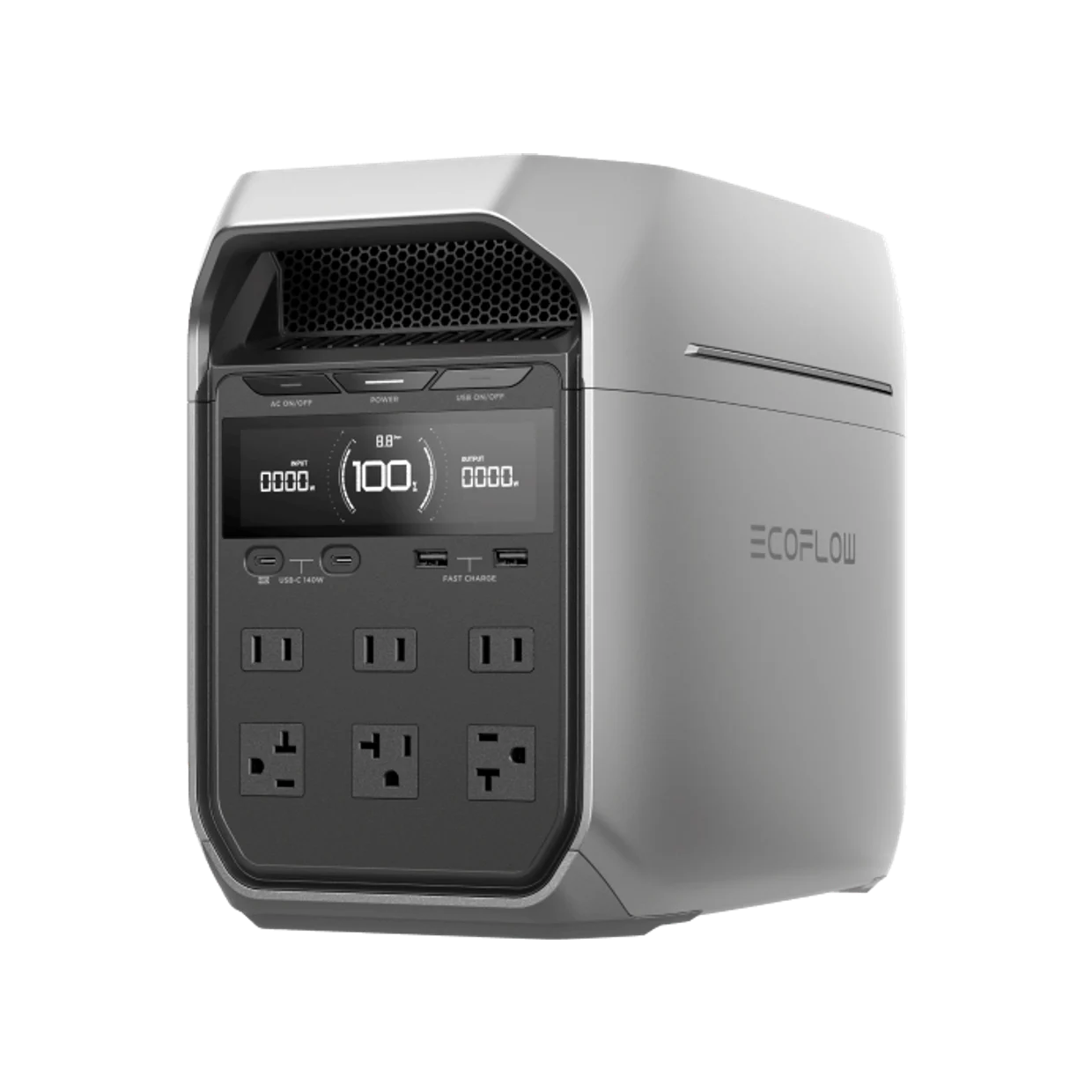 | 1,024 Wh | 1,800 W | 3,600 W | 27.6 lb | Check EcoFlow |
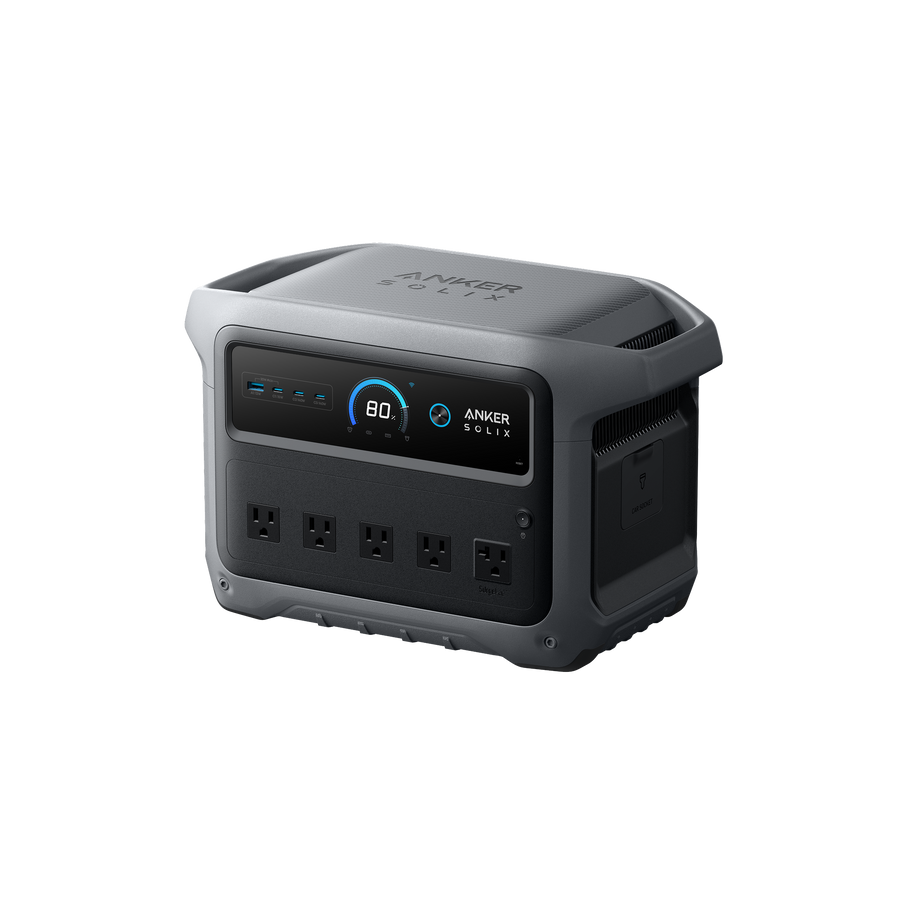 | 1,024 Wh | 2,000 W | 3,000 W | 24.9 lb | Check Anker |
Manufacturer boost modes are not substituted for a general surge rating. Direct manufacturer links exclude Amazon.
Continue through this cluster
Use the next page that answers your unresolved constraint
Evidence used on this page
Important fields are tied to a specific source. Manufacturer claims, government guidance, calculations, and planning assumptions remain separate.
- Calculation and compatibility methodology
Power Station Station
Defines capacity, efficiency, reserve, duty-cycle, voltage, continuous-output, and startup checks used across the site.
planning assumption
- DELTA 3 Plus product specifications
EcoFlow US
US product page. Capacity, output, solar input, cycle life, weight, UPS, and warranty checked.
official product page
- C1000 Gen 2 product specifications
Anker SOLIX US
US page. Capacity, output, peak, input, weight, UPS, and charging claims checked.
official product page
- Portable power station collection
Anker SOLIX US
Official US collection page. Current direct C1000 Gen 2 price checked.
official product page
- C1000 Gen 2 battery support record
Anker SOLIX Support
Battery chemistry and cycle-retention claim checked.
official support